

Prototype Injection Mold Cost vs. Production Mold Cost: Key Differences
Why the Quotations Are Different
One of the most common questions during product development is whether a company should build a prototype mold first or move directly to a production mold. The answer should not be based only on the initial tooling quotation. Prototype injection mold cost and production mold cost reflect very different engineering objectives. A prototype tool is primarily designed for validation and limited production, while a production mold is designed for long-term manufacturing efficiency.
Why Prototype Molds Usually Cost Less
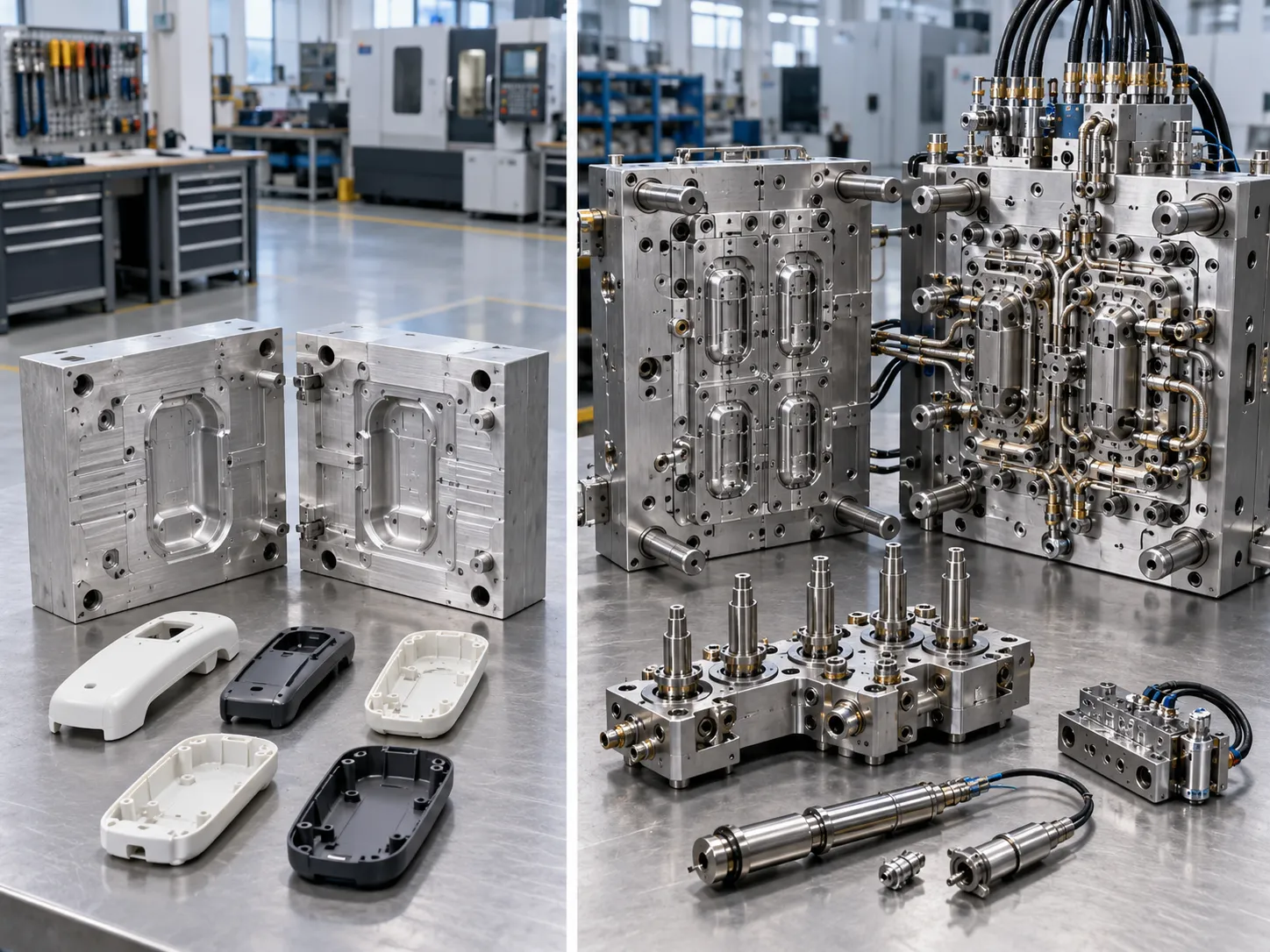
Prototype molds normally use simpler structures. Depending on the project, a prototype tool may use one cavity, simplified mold bases, manual inserts, cold runners, reduced automation, aluminum or simplified steel, and basic cooling systems. These decisions reduce unnecessary manufacturing complexity while preserving the functions required to produce useful molded parts. Learn more about HPDI's prototype injection molding service.
Production Molds Have a Different Objective
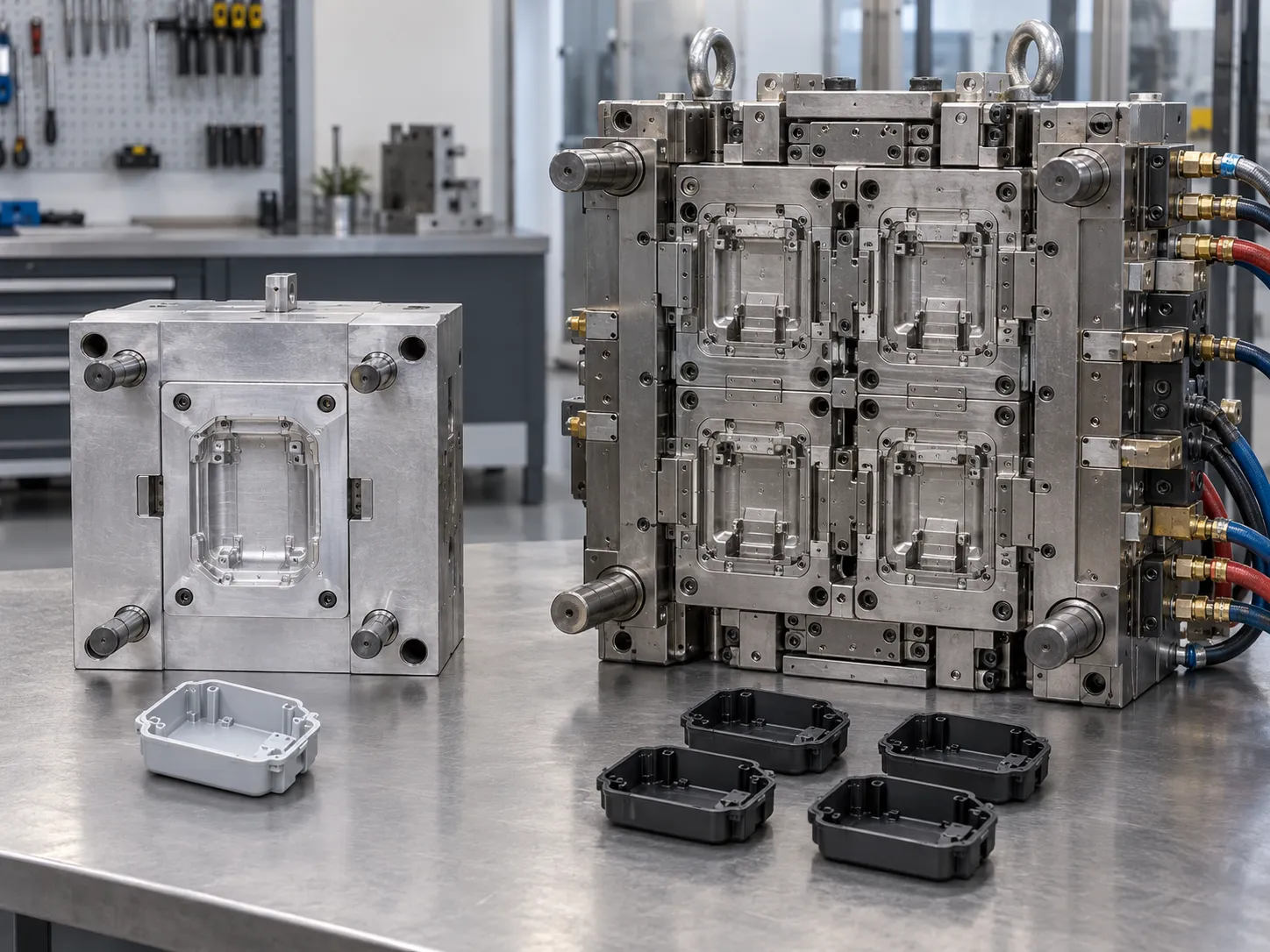
A production mold may need to produce hundreds of thousands or millions of components efficiently. The tooling system may therefore require hardened tool steel, multiple cavities, hot runners, automatic sliders, lifters, advanced cooling, sensors, and robotic automation. Each feature adds design, manufacturing, assembly, and testing requirements.
Mold Material Affects Cost
Aluminum is often considered for prototype tooling because it can be machined efficiently. Simplified steel is another common option where additional durability or wear resistance is required. The correct material depends on resin, filler content, quantity, geometry, pressure, and required mold life. Choosing the cheapest material without considering these factors can increase total project cost if the mold wears prematurely. Learn more about HPDI's manufacturing and inspection facilities.
Cavity Count Is Important
A single-cavity mold normally costs less than a multi-cavity mold. For prototype validation, high production output may not be necessary. A one-cavity tool can provide enough parts for functional testing, assembly, certification, customer evaluation, and pilot builds. Once demand becomes stable, a multi-cavity production mold can be designed using information collected during prototype molding.
Hot Runner vs. Cold Runner
Hot-runner systems can reduce runner waste and support automated high-volume manufacturing, but they add components, temperature controls, electrical systems, maintenance, and mold-design complexity. For prototype or low-volume projects, a simple cold-runner system may be more economical. The decision should be based on material cost, quantity, part geometry, and production objectives. Learn more about HPDI's case studies.
Slides and Undercuts Increase Tooling Cost
Side holes, hooks, clips, and other undercuts may require slides or lifters. A production mold typically automates these actions. Prototype tooling can sometimes use manual inserts instead. This reduces tooling complexity but increases operator involvement. For low quantities, that trade-off may be economically reasonable.
Tool Life Has a Cost
A mold engineered for very long service life requires greater attention to material hardness, wear surfaces, alignment, cooling, replaceable components, and surface treatment. If a project only needs several hundred or several thousand parts, paying for extremely long tool life may not provide value. The tooling system should match realistic production requirements. Learn more about HPDI's FAQ.
Compare Total Project Cost
The lowest mold quotation is not necessarily the lowest-cost development strategy. A company may move directly into an expensive production mold and later discover that a snap-fit fails, a housing warps, a connector does not align, a gate creates a weak weld line, or the selected resin cannot fill the part consistently. Prototype tooling adds an early investment but may prevent larger downstream corrections.
Build a Cost Model around the Project Stage
A useful tooling comparison includes more than the mold quotation. Add expected part quantity, molding cost, material waste, secondary operations, inspection, shipping, likely engineering changes, and the financial risk of changing a finished production tool. Prototype tooling often has a higher unit part cost but a lower commitment. Production tooling often has a higher initial investment but lower unit cost when volume is stable. The economical choice depends on where the project sits on that curve. Learn more about HPDI's contact page.
Consider the Cost of Uncertainty
New products contain uncertainty in design, demand, and material selection. A production mold locks in more assumptions at once. If market demand is unproven or engineering testing is incomplete, the cost of being wrong can exceed the price difference between prototype and production tooling. A simplified mold can act as an insurance stage, allowing the team to purchase information before purchasing capacity.
Know When the Production Mold Becomes Justified
Moving to production tooling makes sense when the design is validated, resin is fixed, demand is forecast with reasonable confidence, and the required output exceeds what the prototype tool can supply efficiently. At that point, information from the prototype program can be used to optimize cavity count, runner type, cooling, automation, and inspection. The production mold is then an upgrade based on evidence rather than a speculative first step.
Separate Tooling Cost from Part Cost
A prototype mold may look inexpensive while producing a higher unit part cost because of manual inserts, longer cycle times, or a single cavity. A production mold may have the opposite profile: high tooling investment but lower part cost through automation and multiple cavities. Comparing only mold quotations can therefore be misleading. Calculate tooling and molded-part cost together across the expected program quantity, then include the value of flexibility and the probability that engineering changes will still be required.
Conclusion
Prototype injection mold cost should not be compared with production mold cost using the tooling quotation alone. Prototype molds prioritize flexibility, validation, lower complexity, and smaller quantities. Production molds prioritize long tool life, automation, cycle efficiency, and high output. For many new products, a simplified steel or aluminum prototype mold provides an economical way to identify design and manufacturing risks before committing to high-volume tooling.