

Can You Make Just One Injection Molded Prototype?
A product team may need only one functional plastic component to check a latch, fit a connector, or show an engineering concept. That request is often described as a “single piece injection mold & injection molding production prototype,” but the wording hides an important decision: is one finished sample needed, or is one part design being prepared for repeated molding? The answer determines whether injection molding is a sensible next step. This guide explains the tooling economics, the testing conditions that justify a molded sample, and the information a buyer should provide before asking a mold shop for a one-piece prototype quotation.
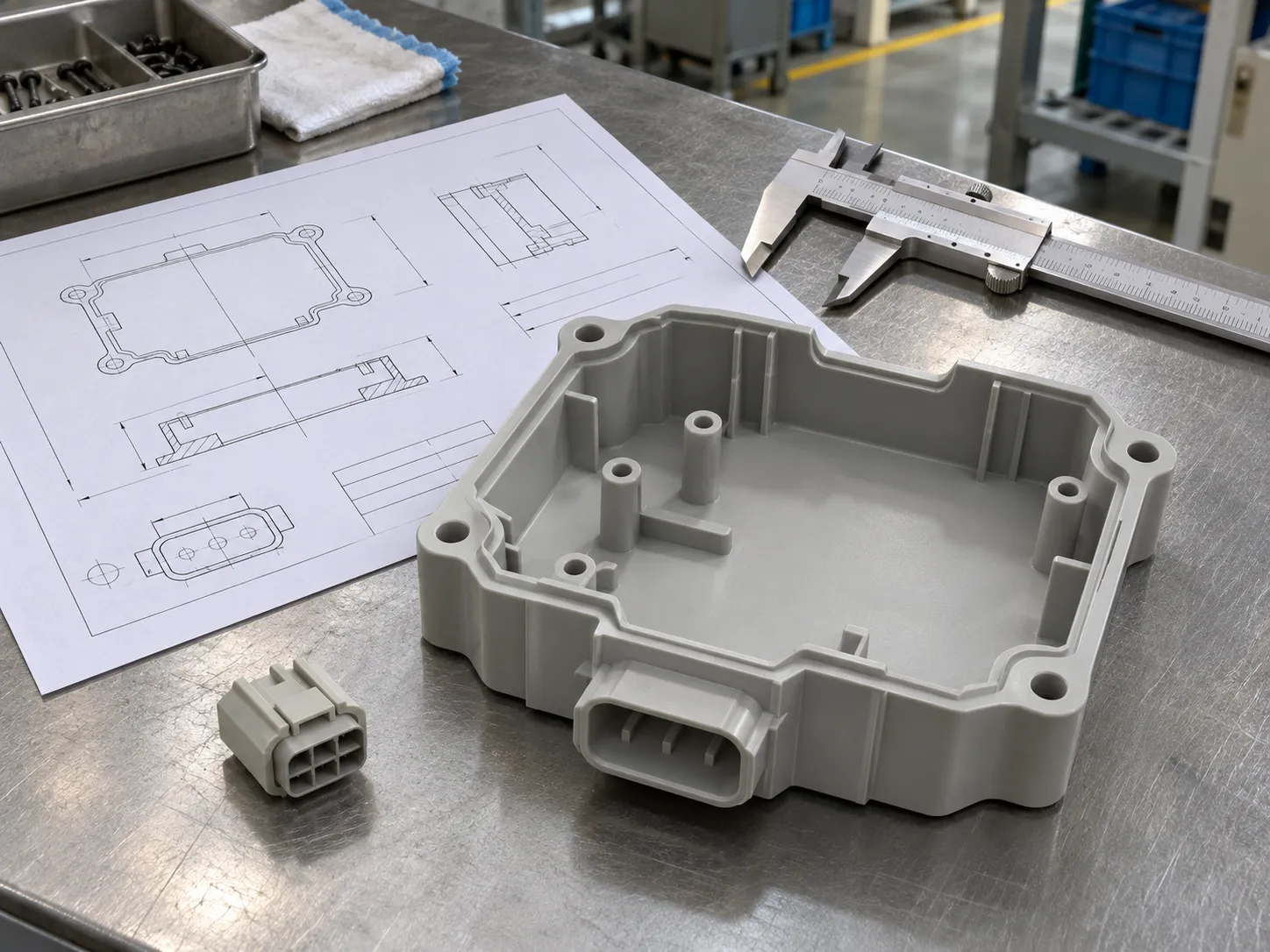
Can injection molding produce only one prototype part?
Yes. An injection mold can produce one acceptable sample after setup and trials, but the customer normally pays for tooling, machine setup, material preparation, not just one piece of plastic. For one-off visual or fit checks, CNC machining or 3D printing may be more economical. Injection molding becomes defensible when the manufacturing process itself matters to the test.
Why a one-piece molded prototype carries tooling costs
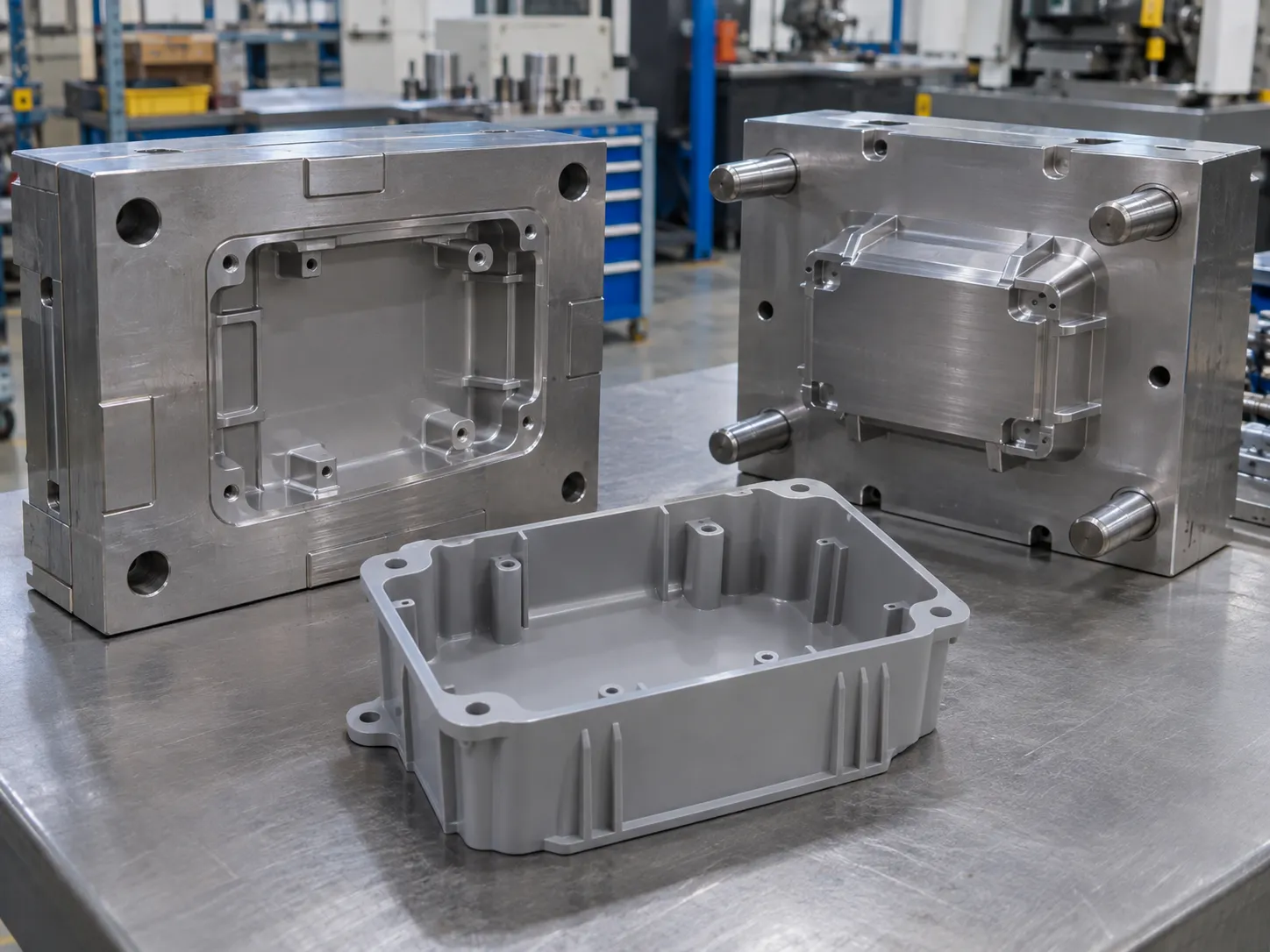
An injection molded part requires a cavity and core arrangement, a feed path, adequate venting, controlled cooling, and a way to release the part. Even a simplified prototype tool must withstand injection pressure and maintain alignment. Its design may also need a removable insert, runner, ejection pins, or side-action mechanism. None of that disappears when the order is for one sample.
The first acceptable piece is not necessarily the first shot. Trial parts may be used to establish filling, packing, cooling, ejection, and cosmetic conditions. Some might be destructive test specimens. Consequently, the buyer should ask whether the quotation covers tool construction, a trial, an agreed number of accepted samples, dimensional inspection, and any later remolding. HPDI describes simplified steel prototype molds and aluminum tools within its prototype tooling services; selection still depends on the actual drawing and resin.
Decide whether the test requires actual injection molding
| Engineering question | Usually suitable starting method | When a molded sample adds value |
|---|---|---|
| Does the shape fit an enclosure? | 3D print or CNC part | When shrinkage changes a critical mating fit |
| Can stakeholders review appearance? | Printed visual model | When gate, weld line, or molded texture matters |
| Does the intended resin perform correctly? | Material screening first | When grade-specific molded behavior must be tested |
| Does a thin clip survive assembly? | Printed geometry study | When actual resin, flow orientation, and molding stress matter |
| Can a future mold fill this wall layout? | DFM analysis | When physical filling and ejection evidence is required |
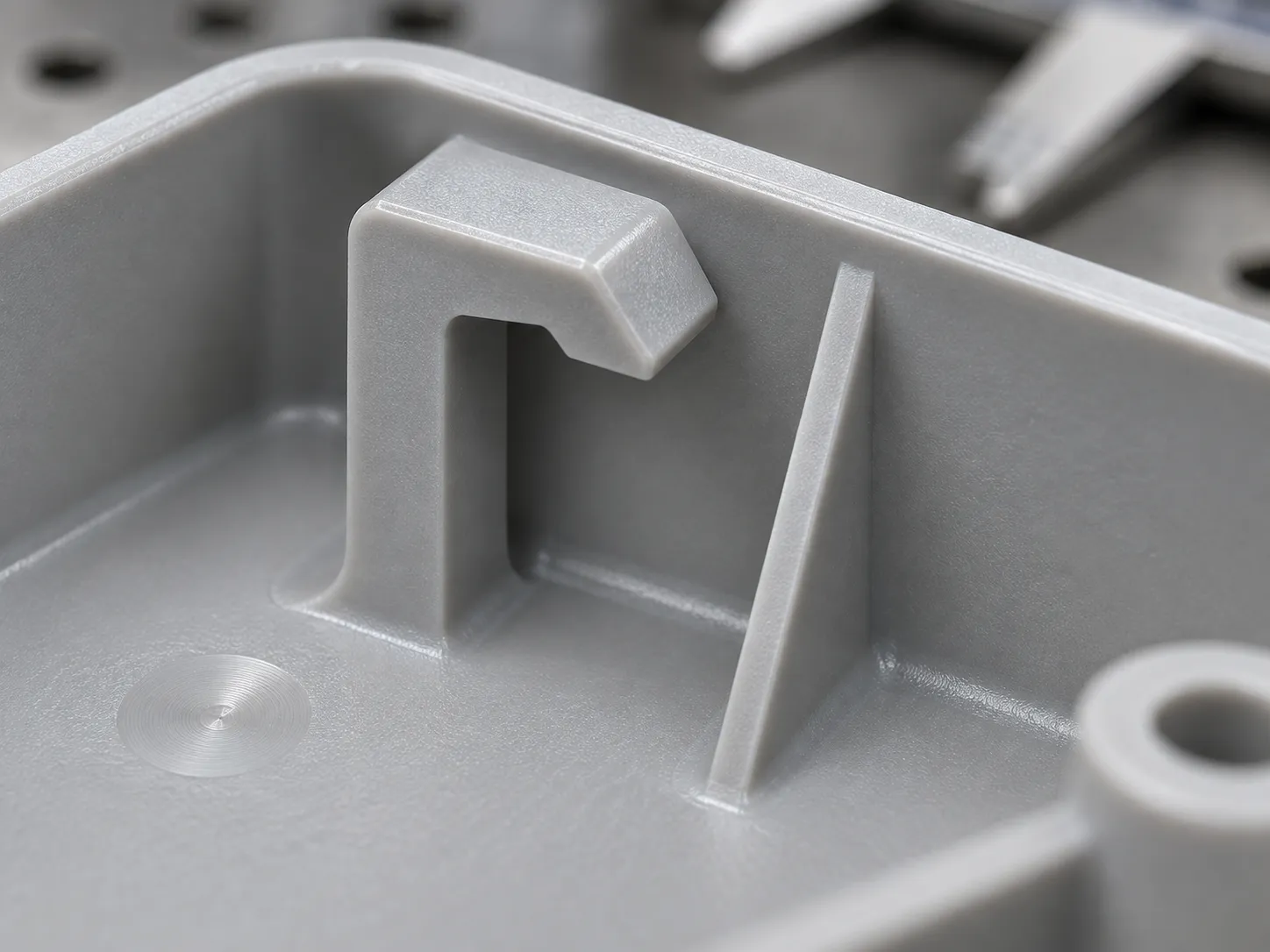
An illustrative example is a housing with a snap hook beside a thin wall. A printed sample may reveal interference, yet it cannot necessarily reproduce the local fiber orientation or residual stress of a molded engineering resin. A molded trial could answer a different question: whether the intended part and process can make a usable clip. This is a hypothetical engineering scenario, not a reported customer project.
Compare the total decision cost, not only part price
For purchasing, compare two scenarios: obtaining one physical object and obtaining process-representative evidence. The first may require only a model and finishing. The second can require DFM, a tool, several setup shots, an approved resin grade, inspection, and a documented test. Cost per delivered piece is therefore an incomplete basis for selecting the process.
Request an itemized quotation with tool ownership, permissible design changes, sample quantity, material procurement, inspection scope, and freight. Ask whether the tool can produce additional samples after a revision. A tool that supports repeated tests may have more practical value than one that produces exactly one accepted part. The company's injection mold RFQ guidance gives useful starting inputs, but the buyer should state what question the sample must answer.
What must be defined before the first trial?
Record the exact resin manufacturer and grade, color or filler package, latest CAD revision, critical drawing dimensions, acceptable cosmetic marks, and mating components. For a functional test, describe the load, assembly sequence, conditioning, and pass/fail criteria. If the test will destroy the only sample, plan spare specimens rather than assuming a one-piece order is sufficient.
Agree which measurements are required in the free state and which are required after assembly. Identify gate and ejector marks that cannot occupy visible or functional surfaces. The shop may propose a simplified tool, but the test plan must remain under the customer's control. Reviewing HPDI's mold-making and inspection facilities can help frame questions about the available processes.
A practical go/no-go checklist
Choose a non-molded prototype if the decision is only about shape, ergonomics, or early assembly clearance.
Consider a molded prototype if real-resin strength, warpage, weld lines, or repeatable ejection could change the design.
Do not order exactly one test specimen if the inspection is destructive, variable, or requires comparison between process conditions.
Ask for DFM before tooling if thin ribs, undercuts, shutoffs, or precision interfaces are unresolved.
Clarify future use if the same tool may supply later engineering builds or a bridge run.