

CNC Machining vs. Laser Engraving for Aluminum Parts
Introduction
Aluminum is widely used in modern manufacturing because of its good machinability, low weight, and attractive strength-to-weight ratio. In aerospace, automotive, electronics, and mold-making applications, CNC machining can produce accurately shaped aluminum parts, while laser engraving can add permanent identification and surface details.
This guide explains how CNC aluminum machining and laser engraving work, and compares their typical costs, precision, production efficiency, and industrial applications.
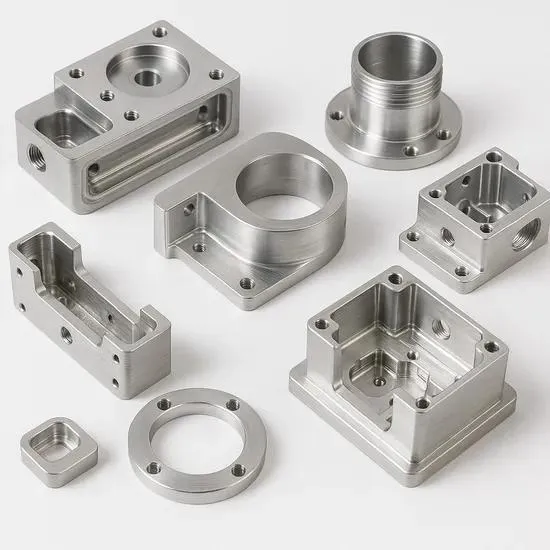
Key distinction: CNC machining creates the part's three-dimensional shape by removing material. Laser engraving usually adds text, codes, or fine surface features to an existing part. They are often complementary manufacturing steps rather than direct substitutes.
1. CNC Aluminum Machining Process Overview
CNC machining is a subtractive manufacturing process. Computer-controlled cutting tools remove material from an aluminum block or other stock to create the required geometry. It can achieve high repeatability and close dimensional tolerances when the design, machine, tooling, and inspection methods are appropriate.
Typical CNC Machining Workflow
CAD design modeling: Create or finalize the three-dimensional part model and technical drawings.
Toolpath programming: Generate machining operations and cutting paths using CAM software.
Rough machining: Remove the bulk of the unwanted aluminum material.
Precision finishing: Machine critical faces, holes, pockets, and other detailed features.
Quality inspection: Check dimensions, surface finish, and functional requirements against the drawing.
2. Laser Engraving Process for Aluminum
Laser engraving or marking uses a focused energy beam to create visible markings on an aluminum surface without contacting it with a cutting tool. Depending on the laser, the aluminum alloy, and any surface coating, the process may remove a small amount of material or alter the surface appearance.
Common applications include serial numbers, QR codes, logos, product branding, and technical identification. Laser marking is especially useful when many parts require consistent, traceable information.
3. Cost Comparison: CNC Machining vs. Laser Engraving
Costs depend on the actual operation. Machining an entire aluminum housing generally requires more cutting time and setup than adding a small identification mark. However, laser marking equipment itself can involve substantial capital investment. The comparison below describes typical outsourced processing jobs, not the purchase price of each machine.
| Factor | CNC Machining | Laser Engraving |
|---|---|---|
| Typical Job Cost | Medium to high for complex part machining | Often lower for a simple marking operation |
| Operating Cost | Cutting tools, machine time, fixturing, and consumables | Laser equipment, energy, extraction, and handling |
| Tool Wear | Mechanical cutting tools require replacement | No contact cutting-tool wear |
| Setup Time | Depends on fixturing and toolpath complexity | Often short for repeated standard marks |
| Best Use | Producing structural geometry and precision features | Surface marking, traceability, and identification |
Costs are application-dependent; these processes perform different functions and should not be evaluated solely by cost per operation.
4. Precision and Accuracy Comparison
CNC machining accuracy describes how closely the finished part dimensions match the engineering drawing. Laser engraving precision generally concerns marking position, line width, contrast, and the consistency of surface detail. These are different metrics.
| Metric | CNC Machining | Laser Engraving |
|---|---|---|
| Dimensional Accuracy | Some precision applications target approximately ±0.01–0.05 mm, subject to part and process | Measured by mark placement and feature resolution, not bulk part tolerance |
| Detail Level | High for accessible machined features | Very fine surface marking is possible |
| Depth Control | Controlled material removal with cutting tools | Shallow surface marking or controlled engraving depth |
| Material Removal | Significant removal to produce component geometry | Usually limited to the marking area |
Tolerance and mark resolution depend on machine capability, aluminum grade, feature geometry, process settings, and inspection.
5. Production Efficiency Comparison
CNC machines can manufacture complete parts from stock material, while laser systems may apply identification marks in a short additional cycle. Production speed should therefore be judged against the function each process performs.
| Factor | CNC Machining | Laser Engraving |
|---|---|---|
| Speed | Depends on volume of material removed and complexity | Often fast for small marks and serial codes |
| Automation Level | High with suitable fixtures and production equipment | High with programmed marking and automated handling |
| Batch Suitability | Suitable for prototypes through production batches | Suitable for repeated identification across large batches |
| Post-processing | May need deburring, cleaning, or surface finishing | Usually limited; cleaning or verification may be required |
6. Industrial Applications
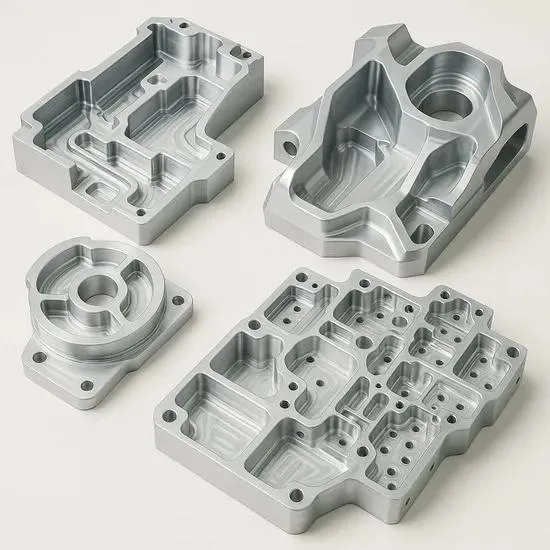
Aluminum machining and engraving are used across a range of industries. CNC machining creates functional components, and laser engraving supports branding, marking, and traceability on suitable surfaces.
Aerospace: Structural fittings and machined brackets with identification marks.
Automotive: Housings, brackets, and serialized components.
Consumer Electronics: Aluminum device enclosures, frames, and product branding.
Medical Equipment: Precision equipment components and traceability markings, subject to applicable requirements.
Industrial Machinery and Mold Making: Machined cavities, fixtures, tooling, and part identification.
7. Key Advantages of Aluminum Processing
Lightweight parts with a useful strength-to-weight ratio.
Efficient machining for appropriate aluminum alloys and geometries.
Practical production options for prototypes and small batches.
Compatibility with surface finishes such as anodizing, subject to alloy and specification.
Clear and repeatable identification marks with a properly selected laser process.
Conclusion
CNC machining and laser engraving serve different but complementary purposes in aluminum manufacturing. CNC machining produces the structural shape and dimensional features of a component, while laser engraving adds identification or surface details.
For a complete aluminum component project, manufacturers may machine the part first, apply any required surface treatment, and then engrave or mark it according to the drawing. The correct workflow depends on material, tolerance, finish, marking contrast, production quantity, and lead time.