

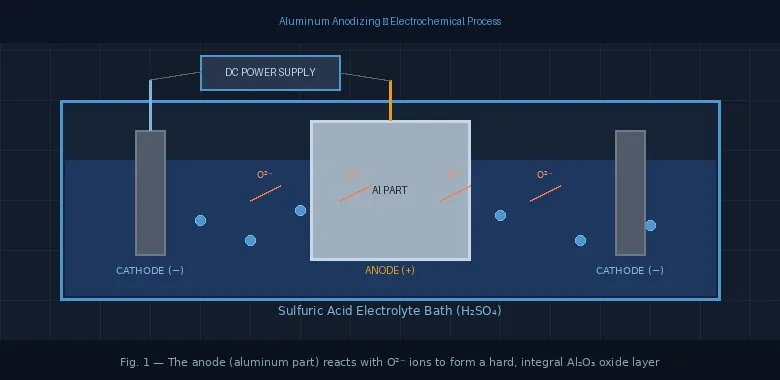
Fig. 1 — The aluminum part (anode) reacts with O2- ions in sulfuric acid, building an integral Al2O3 oxide layer
Unlike paint or plating that sits on top of the surface and can eventually peel or chip, anodizing converts the aluminum itself into a hard oxide layer — permanently bonded, dimensionally stable, and maintenance-free for decades.
3x Harder than raw aluminum (Type III) | 25+ Years service life in demanding environments | Zero Heavy Metals no toxic solvents or waste products |
1. What Is Aluminum Anodizing?
Aluminum anodizing is an electrochemical process that thickens and hardens the naturally occurring oxide layer on aluminum's surface. The part is submerged in a diluted sulfuric acid electrolyte bath and an electrical current is applied. The aluminum part acts as the anode — the positively charged electrode — which is where the term "anodizing" originates.
Oxygen ions released during electrolysis bond with the aluminum to form a dense, hard layer of aluminum oxide (Al2O3). Because this layer grows from the metal itself rather than being deposited on top, it cannot peel, flake, or chip — unlike paint, powder coating, or electroplated finishes.
The Anodizing Process — Step by Step
01 | Pre-treatment (Clean & Etch) Parts are degreased and chemically etched to remove surface oxides and contaminants, creating a clean, uniform base for anodizing. |
02 | Anodizing (Electrolytic Oxidation) The part is immersed in a sulfuric acid bath and connected to the positive terminal of a DC power supply. Oxygen ions bond with the aluminum, building the integral oxide layer. |
03 | Dyeing (Optional) While the oxide layer is still porous, organic or metallic dyes are absorbed into the pores — locking in color that will not fade or chip like paint. |
04 | Sealing Hot deionized water or nickel acetate seals the pores, locking in dye and completing the protective barrier against moisture and contamination. |
2. 8 Key Benefits of Aluminum Anodizing
Here is why engineers across aerospace, automotive, electronics, and consumer goods industries consistently specify anodizing as their preferred surface treatment for aluminum parts.
1. Superior Corrosion Resistance
The dense aluminum oxide layer acts as a permanent barrier against moisture, salt spray, acids, and industrial chemicals. It outperforms paint and powder coating in long-term outdoor, marine, and harsh industrial environments — without cracking, blistering, or delaminating over time.
2. Exceptional Surface Hardness
Standard anodized aluminum is significantly harder than raw aluminum. Type III hard coat anodizing achieves hardness values approaching 70 Rockwell C — comparable to some cutting tool steels — making it ideal for wear-critical applications, moving parts, and high-contact surfaces.
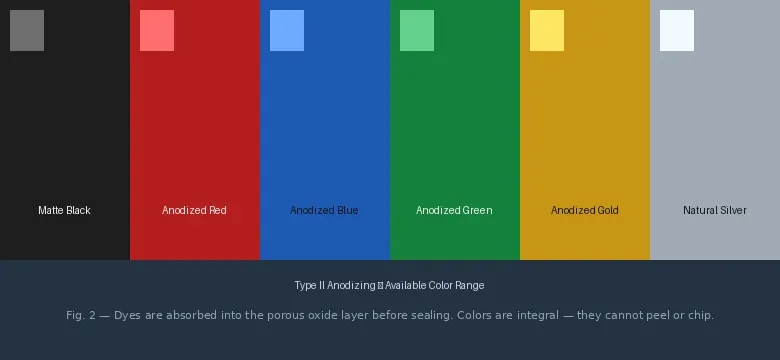
Fig. 2 — Type II anodizing offers a wide color range. Dye is absorbed into the porous oxide layer before sealing — color cannot peel or chip.
3. Wide Color Range & Aesthetic Appeal
The porous oxide layer absorbs dyes before sealing, enabling a broad spectrum of vibrant, stable colors. Colors are integral to the surface and resist UV fading, scratching, and chipping far better than paint or powder coat — making anodizing the finish of choice for premium consumer products.
4. Electrical Insulation
Aluminum oxide is a strong electrical insulator. Anodized parts are widely specified for electronics enclosures, heatsinks, circuit protection housings, and connectors where electrical conductivity must be controlled to prevent short circuits or signal interference.
5. Low Maintenance & Long Service Life
Anodized surfaces resist fingerprints, scratches, and contamination. Routine cleaning requires only mild soap and water — no special chemicals, touch-up paint, or recoating. This dramatically reduces lifetime ownership cost and makes anodized aluminum ideal for architectural applications.
6. Improved Paint & Adhesive Bonding
Before sealing, the microporous oxide layer provides strong mechanical anchoring for paints, inks, adhesives, and PTFE (Teflon) coatings. Bonding to anodized aluminum is significantly more durable than bonding to bare, painted, or plated metal surfaces.
7. Environmentally Friendly
Anodizing uses no heavy metals, VOC solvents, or toxic by-products. The aluminum oxide layer is chemically stable, non-toxic, and fully recyclable at end of life. It is one of the most sustainable surface finishing processes available for metal parts today.
8. No Added Weight or Significant Dimension Change
The oxide layer is extremely thin (5–150 µm) and grows partly inward into the base metal. Dimensional changes are minimal and fully predictable, making anodizing compatible with tight-tolerance CNC machined parts without rework or assembly fit issues.
3. Type I, II & III: Which Anodizing Process Is Right?
There are three principal types of aluminum anodizing, each optimized for different performance levels, thickness requirements, and application environments.
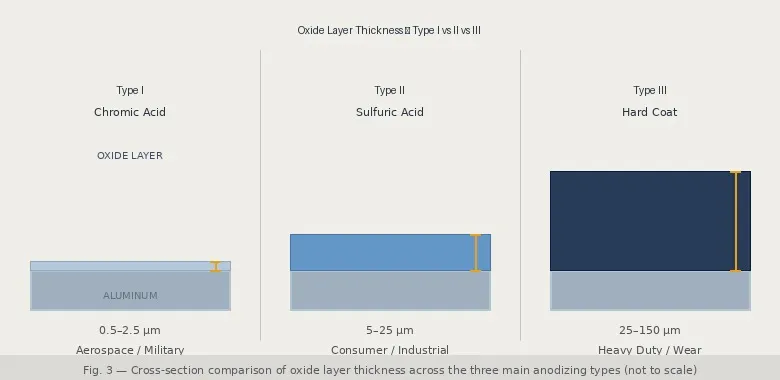
Fig. 3 — Oxide layer thickness comparison: Type I (thin, flexible) vs Type II (standard) vs Type III (heavy-duty). Not to scale.
Type | Thickness | Key Properties | Best Applications |
Type I Chromic Acid | 0.5–2.5 µm | Thin, flexible; excellent corrosion resistance with minimal impact on fatigue strength | Aerospace & military, fatigue-sensitive parts |
Type II Sulfuric Acid | 5–25 µm | Good hardness, full color range, strong corrosion and wear protection | Consumer goods, automotive trim, electronics, architecture |
Type III Hard Coat | 25–150 µm | Maximum hardness (up to 70 HRC); superior wear and abrasion resistance | Industrial machinery, hydraulics, defense, firearms |
Unlike paint or plating that eventually fails at the surface, anodizing becomes part of the metal itself — growing inward and outward simultaneously. That is why anodized parts still look and perform well decades after paint would have peeled.
4. Anodizing vs. Paint, Powder Coat & Plating
When selecting a surface treatment for aluminum parts, engineers evaluate anodizing against three common alternatives. Here is how they compare across the dimensions that matter most:
Factor | Anodizing | Paint / Powder Coat | Electroplating |
Bond to Metal | Integral — part of the metal | Adhesive — sits on surface | Deposited layer |
Peel / Chip Risk | None | Yes — degrades over time | Can delaminate |
Corrosion Resistance | Excellent | Good (until coating breached) | Good |
Surface Hardness | High; Type III very high | Low | Moderate |
Color Stability | Excellent — UV stable | Fades over time | Limited options |
Dimension Change | Minimal & predictable | Adds thickness variably | Adds thickness |
Eco Impact | Low — no heavy metals | VOC solvents | Heavy metal waste |
Maintenance | Soap & water only | Touch-up recoating needed | Moderate upkeep |
5. Industry Applications
Anodized aluminum is one of the most widely specified surface treatments across every major manufacturing sector, valued for its unique combination of durability, aesthetics, and cost-effectiveness.
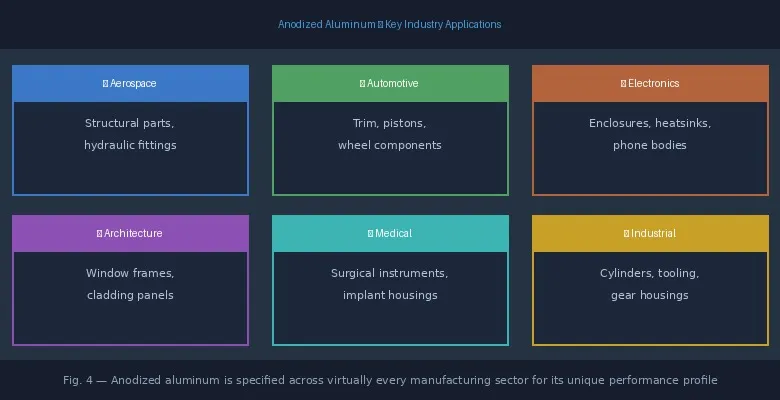
Fig. 4 — Anodized aluminum is specified across aerospace, automotive, electronics, architecture, medical, and industrial applications.
– Aerospace & Defense — structural fittings, hydraulic components, airframe parts (Type I & III)
– Automotive — trim panels, pistons, wheel components, engine housings (Type II & III)
– Consumer Electronics — laptop enclosures, smartphone bodies, camera housings (Type II)
– Architecture — window frames, curtain walls, cladding panels rated for 30+ years outdoors
– Medical Devices — surgical instruments, implant housings, diagnostic equipment (Type II/III)
– Industrial Machinery — hydraulic cylinders, gear housings, tooling, conveyor components (Type III)
– Marine — boat fittings, offshore equipment, underwater housings (Type III)
– Sports & Consumer Goods — bicycle components, outdoor equipment, cookware (Type II)
Conclusion
Aluminum anodizing has been a manufacturing mainstay for over 80 years for good reason. It delivers corrosion resistance, surface hardness, color versatility, electrical insulation, and environmental sustainability that no competing surface treatment can fully replicate at the same cost point. Whether you are specifying a finish for an aerospace bracket, a consumer electronics enclosure, or an architectural facade element, anodizing provides a permanent, integral surface treatment that outlasts the alternatives — without adding weight, significantly changing dimensions, or requiring ongoing maintenance. For most aluminum parts destined for demanding or visible applications, anodizing is not just a good choice. It is the standard one.
Copyright 2026(C) HUAWEI PRODUCT DEVELOPMENT INDUSTRIAL LTD (2009-2024)
All Rights Reserved
marketing@prototypeinjectionmold.com
Contact Information :
Byron Wang
Phone: +86- 86-755-8238-2595
Mobile: +86-139-2383-5403
Email: marketing@prototypeinjectionmold.com
HPDI (HUAWEI PRODUCT DEVELOPMENT INDUSTRIAL LTD)
Address:Building 3, Puxia Industrial Zone, Liuyue, Henggang St., Longgang District, Shenzhen., China