

Introduction
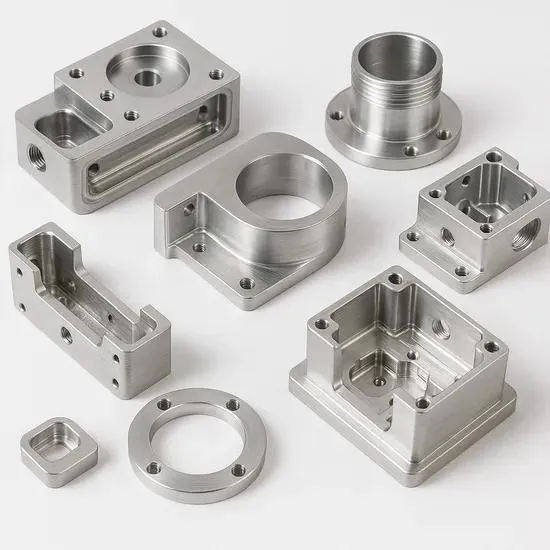
Aluminum is widely used in modern manufacturing due to its excellent machinability, lightweight structure, and high strength-to-weight ratio. In industries such as aerospace, automotive, electronics, and mold making, aluminum components are commonly processed through CNC machining and laser engraving to achieve both structural precision and high-quality surface marking.
This guide explains how aluminum machining and laser engraving work, including cost efficiency, precision capability, and production speed, based on industrial manufacturing practices.
1. CNC Machining Process Overview
CNC machining is a subtractive manufacturing method where material is removed from an aluminum block using computer-controlled tools. The process ensures high accuracy and repeatability for complex geometries.
Typical CNC Workflow:
CAD design modeling
Toolpath programming
Rough machining
Precision finishing
Quality inspection
2. Laser Engraving Process
Laser engraving uses a high-energy beam to mark the surface of aluminum without physical contact. It is commonly used for serial numbers, QR codes, branding, and technical identification.
3. Cost Comparison (CNC vs Laser Engraving)
Factor | CNC Machining | Laser Engraving |
Initial Cost | Medium–High | Low |
Operating Cost | Medium | Low |
Tool Wear | High | Very Low |
Setup Time | Medium | Very Fast |
Best Use | Structural parts | Marking & identification |
4. Precision and Accuracy Comparison
Metric | CNC Machining | Laser Engraving |
Dimensional Accuracy | ±0.01–0.05mm | High surface resolution |
Detail Level | High | Very High (surface only) |
Depth Control | Mechanical cutting | Micron-level marking |
Material Removal | High | Minimal |
5. Production Efficiency Comparison
Factor | CNC Machining | Laser Engraving |
Speed | Medium | Very Fast |
Automation Level | High | Very High |
Batch Suitability | Low–High | Very High |
Post-processing | Often required | Minimal |
6. Industrial Applications
Aluminum machining and engraving are widely used in aerospace structures, automotive components, consumer electronics housings, medical devices, and industrial machinery parts.
7. Key Advantages of Aluminum Processing
Lightweight yet strong material performance
Fast machining and production speed
Cost-effective for prototypes and small batches
High compatibility with surface finishing
Excellent engraving clarity and durability
8. Internal Links (SEO Optimization)
product development services: https://www.prototypeinjectionmold.com/CaseStudy
plastic injection molding services: https://www.huaweiproduct.com/One-Stop-Service
prototype and production molds: https://www.huaweiproduct.com/Prototype-and-Production-Molds
industrial design services: https://www.huaweiproduct.com/Industrial-Design
low-volume manufacturing solutions: https://www.prototypeinjectionmold.com/CaseStudy
Copyright 2026(C) HUAWEI PRODUCT DEVELOPMENT INDUSTRIAL LTD (2009-2024)
All Rights Reserved
marketing@prototypeinjectionmold.com
Contact Information :
Byron Wang
Phone: +86- 86-755-8238-2595
Mobile: +86-139-2383-5403
Email: marketing@prototypeinjectionmold.com
HPDI (HUAWEI PRODUCT DEVELOPMENT INDUSTRIAL LTD)
Address:Building 3, Puxia Industrial Zone, Liuyue, Henggang St., Longgang District, Shenzhen., China