

Simple Mold Tooling for Fast, Cost-Effective Small-Batch Production
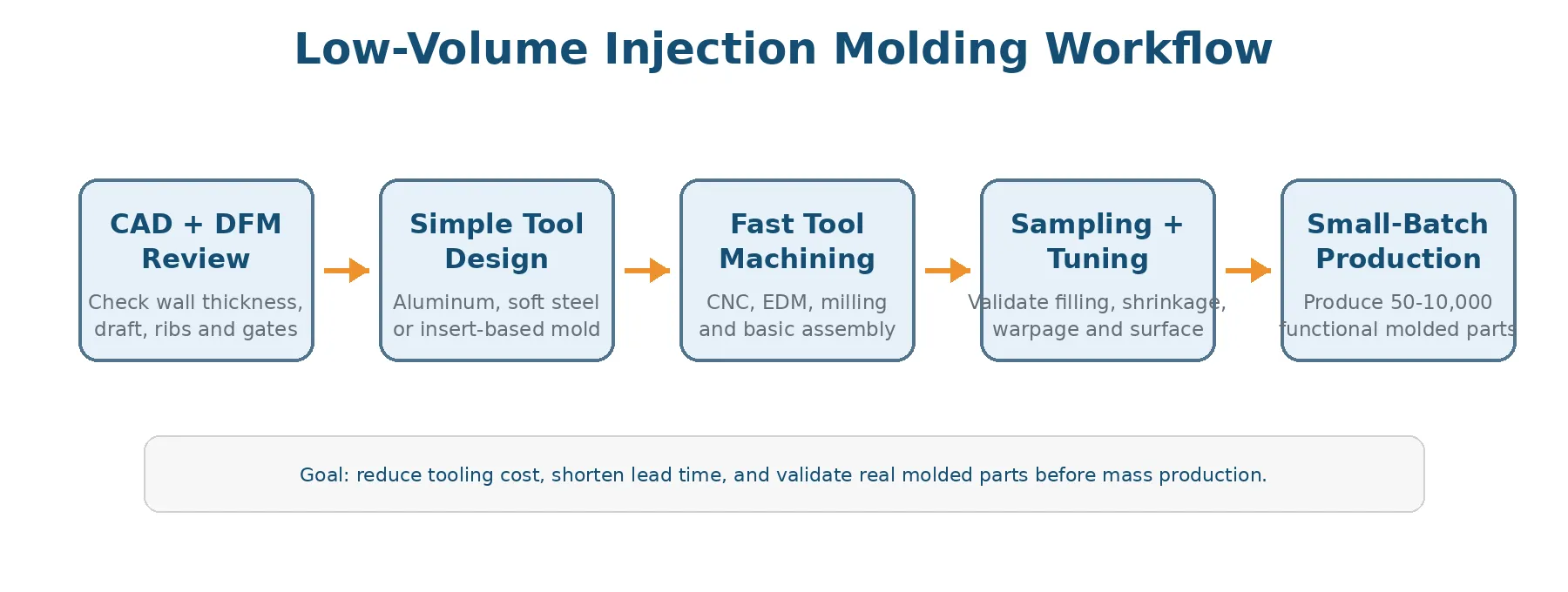
Figure 1. Low-volume injection molding workflow from CAD review to small-batch production.
What Is Low-Volume Injection Molding?
Low-volume injection molding is a practical way to produce small batches of plastic parts without investing in expensive full-production tooling. Instead of building complex hardened steel molds designed for millions of shots, manufacturers use simple molds, aluminum molds, soft steel tools, or replaceable inserts to make parts quickly and economically.
This process is useful for functional samples, pilot production, market testing, bridge production, and custom plastic components in limited quantities. Compared with traditional production molds, low-volume molds usually cost less, have simpler structures, and can be manufactured much faster.
Why Simple Molds Work for Small-Batch Production
A simple mold does not mean poor quality. It means the mold is designed around the real production requirement. If a project only needs 100, 500, or 5,000 parts, the mold does not always need multi-cavity automation, complicated cooling systems, premium mold steel, or high-end equipment.
By removing unnecessary complexity, a supplier can reduce machining time, shorten sampling cycles, and make future design changes easier. This makes low-volume injection molding valuable for startups, engineering teams, purchasing departments, and manufacturers that need real molded parts before committing to mass-production tooling.
Table 1: Simple Mold vs. Production Mold
Item | Simple Mold / Low-Volume Tooling | Full Production Mold |
Typical Quantity | 50-10,000 parts | 50,000+ parts |
Tooling Cost | Low to medium | High |
Mold Structure | Simple, flexible, easy to modify | Complex and optimized for high output |
Lead Time | Fast, often 2-5 weeks | Longer, often 6-12+ weeks |
Mold Material | Aluminum, soft steel, insert tooling | Hardened steel |
Best Use | Prototype, pilot run, bridge production | Long-term mass production |
Design Changes | Easier and cheaper | More difficult and costly |
Key Advantages of Simple Molds
The main advantage is lower tooling cost. Because the mold is not expected to run millions of cycles, lower-cost materials and simpler mold bases can often be used. This helps companies test a product, enter a small market, or support a temporary production need without tying up too much capital.
Speed is another major benefit. Simple molds are faster to design, machine, assemble, and test. Standard CNC machining, EDM, milling, grinding, and basic mold assembly are usually enough for many short-run projects. Advanced production equipment can improve efficiency, but it is not always required for small-batch molding.
Simple molds are also easier to modify. If a snap-fit, rib, sealing feature, or boss needs correction after testing, an insert or local mold area can often be adjusted more quickly than a hardened production tool. This flexibility reduces development risk and helps the product move from prototype to production with fewer surprises.
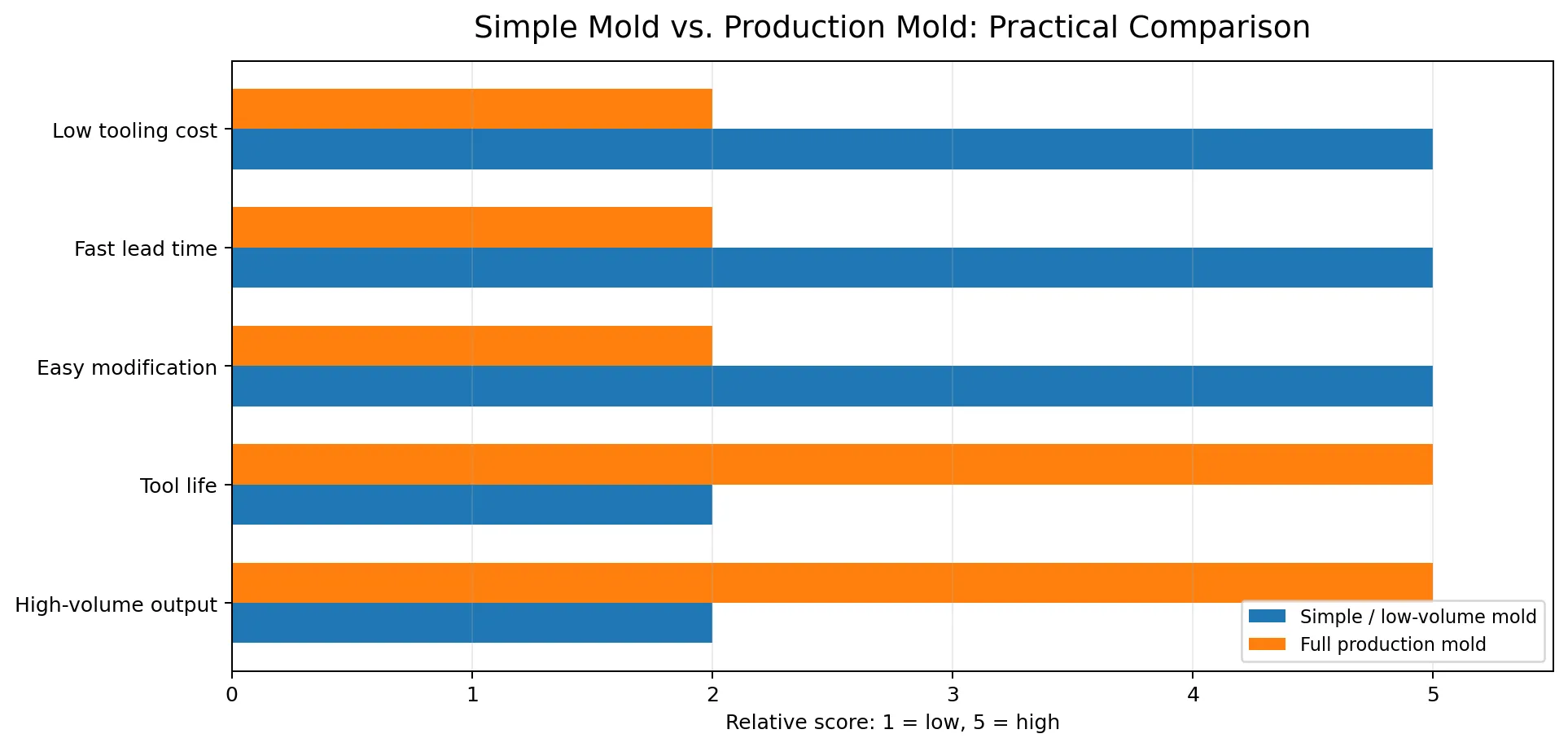
Figure 2. Simple molds offer stronger cost, speed, and modification advantages for low-volume projects.
Suitable Processes and Applications
Although this article focuses on plastic injection molding, the same simple tooling concept is also used in stamping, thermoforming, compression molding, and other forming processes. In stamping, a simple die can produce trial metal brackets or clips. In plastic forming, a low-cost mold can make packaging trays, covers, housings, and functional components.
Low-volume injection molding is commonly used for plastic enclosures, sensor covers, automotive clips, brackets, appliance parts, medical device housings, electronics bezels, and custom industrial components. It is especially useful when a product needs molded material behavior, stable dimensions, and production-like surface quality.
Table 2: Common Applications of Simple Molds
Process | Typical Simple Mold Use | Suitable Products |
Injection Molding | Aluminum mold, soft steel mold, insert mold | Plastic housings, clips, covers, brackets |
Stamping | Simple die, soft tooling, trial die | Metal brackets, panels, clips |
Thermoforming | Simple forming mold | Packaging trays, covers, plastic shells |
Compression Molding | Low-volume mold | Rubber parts, silicone parts, seals |
Prototype Tooling | Bridge mold, test mold | Functional samples, pilot parts |
When to Choose Low-Volume Injection Molding
Choose this method when the design is close to final, but the production quantity is still limited. 3D printing is still better for very early concepts, but it cannot always match the strength, shrinkage, surface finish, or repeatability of molded thermoplastic parts. Low-volume molding gives engineers more realistic test data before full-scale production.
It is also a good bridge solution when final production tooling is still being built. A simple mold can support launch samples, customer validation, regulatory review, assembly trials, or early sales while a long-term mold is prepared.
Table 3: Recommended Quantity Range
Quantity Needed | Recommended Method | Reason |
1-20 pcs | 3D Printing / CNC | Fastest for early concept testing |
50-500 pcs | Prototype Injection Molding | Good for functional validation |
500-10,000 pcs | Low-Volume Injection Molding | Best balance of cost, quality, and speed |
50,000+ pcs | Production Injection Molding | Best for long-term unit cost reduction |
Design Tips for Low-Volume Mold Success
Even simple molds need good design-for-manufacturing review. Wall thickness should be as uniform as possible. Draft angles should be added for easy ejection. Ribs and bosses should avoid heavy material buildup. Gate location, shrinkage, warpage, and parting line position should be checked before machining.
A good DFM review prevents common problems such as sink marks, flash, short shots, deformation, weak weld lines, and poor assembly fit. The goal is to keep the tooling simple while still protecting part quality and manufacturability.
Conclusion
Low-volume injection molding is an efficient solution for companies that need plastic parts quickly, affordably, and in limited quantities. By using simple mold structures, lower-cost tooling materials, and faster manufacturing methods, it helps reduce risk before full-scale production.
For prototype validation, pilot runs, bridge production, or market testing, simple molds provide a strong balance of cost, speed, and quality. Need low-volume plastic parts or simple mold solutions? Contact HWPD to review your CAD files, choose the right tooling strategy, and move from prototype to small-batch production faster.
Recommended Internal Link: https://www.prototypeinjectionmold.com/Service
Copyright 2026(C) HUAWEI PRODUCT DEVELOPMENT INDUSTRIAL LTD (2009-2024)
All Rights Reserved
marketing@prototypeinjectionmold.com
Contact Information :
Byron Wang
Phone: +86- 86-755-8238-2595
Mobile: +86-139-2383-5403
Email: marketing@prototypeinjectionmold.com
HPDI (HUAWEI PRODUCT DEVELOPMENT INDUSTRIAL LTD)
Address:Building 3, Puxia Industrial Zone, Liuyue, Henggang St., Longgang District, Shenzhen., China