

Product teams often face a gap between an approved design and a reliable supply of molded parts. Additive prototypes may arrive quickly, but they cannot always support material testing, assembly-line trials, certification preparation, or a limited market launch. A conventional high-volume mold can deliver the required quality, yet its cost and schedule may be difficult to justify while the design or demand remains uncertain.
Rapid injection molding provides a middle path. It combines streamlined tooling with standard molding equipment to produce functional parts in production-grade plastics. The objective is to remove unnecessary tooling complexity while preserving the features needed for validation and short-run manufacturing.
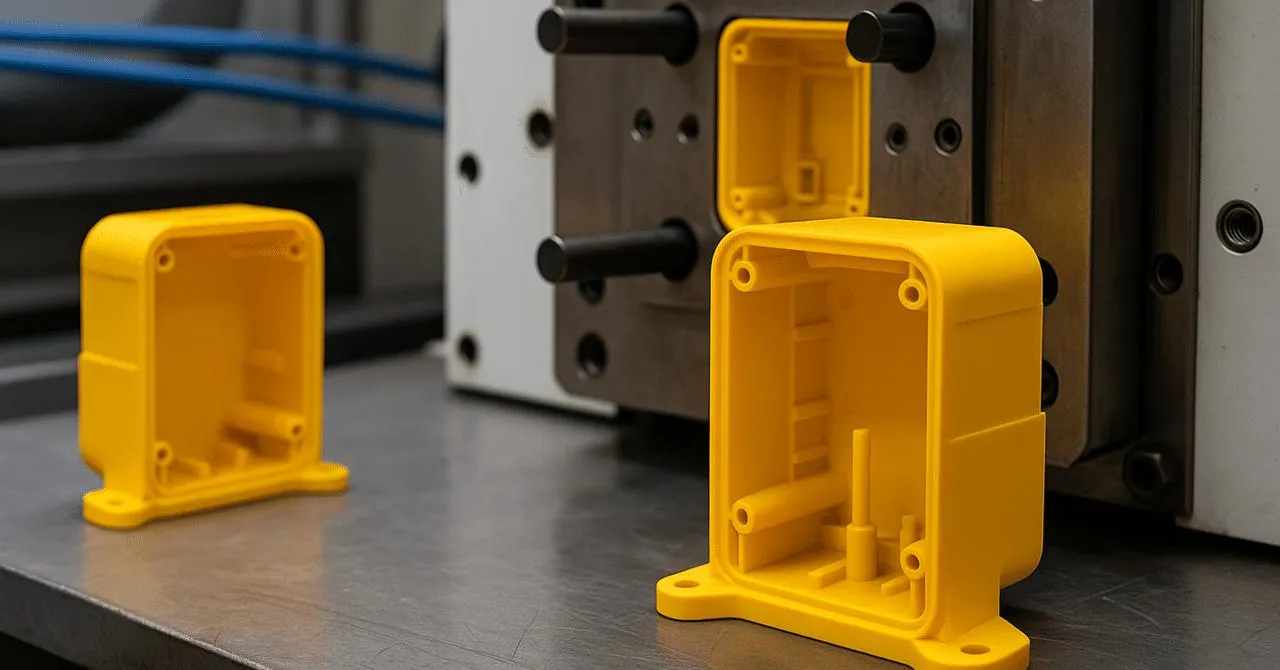
How Rapid Injection Molding Works
The process begins with a DFM review of the CAD model and drawing. Engineers identify mold direction, wall-thickness changes, undercuts, tolerances, gate position, cooling needs, and cosmetic risks. The tool is then designed around the required quantity and test purpose.
A rapid tool may use one cavity, a standard mold base, replaceable inserts, manual actions, simplified cooling, or pre-hardened steel. These decisions shorten the program without changing the basic molding process. After sampling, the tool may produce an engineering batch, pilot quantity, or parts for an initial release.
Where the Time Savings Come From
Fast injection molding depends on coordinated decisions across design, tooling, purchasing, machining, and sampling. The largest savings come from limiting the tool to the actual project requirement.
A validation mold may not need multiple cavities, fully automatic side actions, a complex hot runner, or the hardening strategy required for millions of cycles. A manual insert may be acceptable for several hundred parts, while an automated slide is better for continuous production. Standard mold-base components and early material procurement can further reduce delay.
Rapid Tooling Material Selection
Aluminum and steel are both used in rapid injection molding, but neither is automatically correct for every project. Aluminum is easy to machine and transfers heat efficiently, which can support short schedules and low quantities. It is less suitable for some abrasive, high-temperature, highly polished, or long-life applications.
Pre-hardened steel offers greater wear resistance and can provide a stronger path into bridge production. It is often selected for glass-filled materials, demanding textures, tighter shutoffs, or projects expected to require thousands of parts. The decision should consider resin, geometry, tolerance, surface finish, mold life, and whether the tool may continue producing parts after validation.
Rapid Tooling Material Options
Tool Option | Typical Strength | Best Fit |
Aluminum rapid tool | Fast machining and heat transfer | Lower quantities and simple resins |
Pre-hardened steel | Better wear and tool life | Bridge production and filled materials |
Hardened production steel | Maximum durability | Stable high-volume programs |
Suitable Applications
Rapid injection molding prototyping is valuable when a product requires more than appearance verification. Typical uses include production-material testing, dimensional and assembly validation, environmental testing, certification samples, automotive installation trials, medical-device pilot builds, electronic enclosure validation, limited launches, and temporary supply while a production mold is completed.
Because the parts are molded, engineers can evaluate gate marks, weld lines, sink, shrinkage, molded-in stress, and repeatability—issues that may remain hidden in printed prototypes.
Rapid Injection Molding versus Other Processes
3D printing remains ideal for concept models and frequent design changes. CNC machining is useful when a precise part is needed from a known plastic or metal, while vacuum casting can create cosmetic duplicates from silicone tooling. Rapid injection molding becomes more valuable when the project needs production resin and realistic molding behavior.
Compared with a standard production mold, a rapid tool usually offers lower initial investment and greater flexibility. Unit cost may be higher and manual operations may limit output, but these tradeoffs are often reasonable when learning and launch speed matter more than maximum production efficiency.
How to Prevent a Fast Project from Becoming a Rushed Project
A short schedule should not remove essential controls. The project still needs a controlled CAD revision, material specification, inspection plan, cosmetic standard, and clear approval criteria.
The supplier should explain which tooling simplifications are being used and how they affect part price, mold life, lead time, and future production. If the tool may become a bridge mold, cooling, ejection, steel choice, and maintainability should be planned from the start.
From First Shot to Market Launch
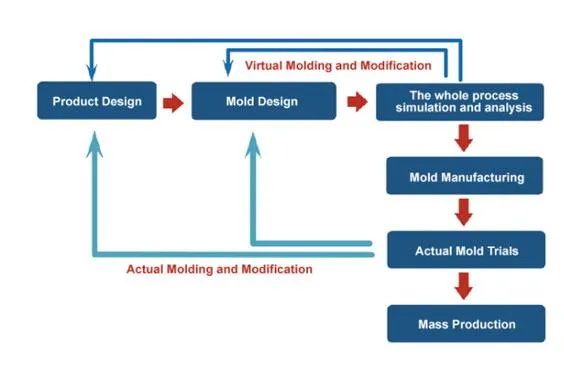
After first sampling, the team reviews dimensions, appearance, assembly, and functional results. Processing trials establish a stable range for melt and mold temperature, injection speed, packing, and cooling. Necessary steel corrections are then completed.
The approved tool can produce parts for pilot assembly or customer evaluation. Feedback should be documented and transferred to the final production plan, creating a data-based transition rather than a disposable prototype step.
Choosing a Manufacturing Partner
A capable supplier should provide more than mold machining. Integrated plastic injection molding services should include DFM, mold design, toolmaking, sampling, measurement, material support, and short-run production. In-house coordination reduces handoffs and makes engineering changes easier to manage.
HPDI supports rapid tools, prototype molds, molded prototypes, and low-volume production for automotive, medical, communication, and precision-equipment projects. Its service, facility, case-study, and FAQ pages help customers prepare a rapid program before requesting a quotation.
Conclusion
Rapid injection molding helps teams obtain production-representative parts without waiting for a high-volume tool. When the mold strategy matches the test quantity, it can shorten validation, support pilot manufacturing, and protect the launch schedule.
The best result combines speed with disciplined DFM, material selection, inspection, and documentation—delivering both faster parts and better information for the next decision.
Copyright 2026(C) HUAWEI PRODUCT DEVELOPMENT INDUSTRIAL LTD (2009-2024)
All Rights Reserved
marketing@prototypeinjectionmold.com
Contact Information :
Byron Wang
Phone: +86- 86-755-8238-2595
Mobile: +86-139-2383-5403
Email: marketing@prototypeinjectionmold.com
HPDI (HUAWEI PRODUCT DEVELOPMENT INDUSTRIAL LTD)
Address:Building 3, Puxia Industrial Zone, Liuyue, Henggang St., Longgang District, Shenzhen., China