

Product development rarely moves directly from a CAD model to mass production. An early prototype may only need to confirm shape and ergonomics, while a later part may need to prove assembly, sealing, strength, dimensional stability, or material behavior. For this reason, 3D printing, CNC machining, and prototype injection molding should not be treated as competing processes. They are complementary tools that remove different types of risk. A supplier offering integrated prototype injection molding services can help a project team choose the right method at each stage.
1. What Each Process Can Validate
3D printing creates parts without a mold and is usually the fastest option for visual review, packaging checks, and early assembly studies. CNC machining produces parts from solid plastic or metal stock and is useful when accuracy and material strength matter. Prototype injection molding uses a rapid or simplified mold to create parts through the same filling, packing, cooling, and ejection stages used in production.
Process | Best Application | Main Limitation |
3D printing | Fast form, fit, and concept checks | Printed material and layer structure may differ from molded parts |
CNC machining | Accurate functional prototypes in solid materials | Cannot reproduce all molding effects |
Prototype injection molding | Production-resin, process, appearance, and batch validation | Requires a tooling investment |
2. When 3D Printing Is the Best First Step
3D printing is most valuable while the design is still changing. Designers can compare shapes, verify clearances, study user interaction, and identify obvious interference before committing to tooling. It is also useful for housings, internal brackets, and assembly mockups because changes can be introduced quickly. At this stage, speed usually matters more than perfect material equivalence. Building a mold too early can lock the project into geometry that has not been confirmed.
3. When CNC Machining Adds More Value
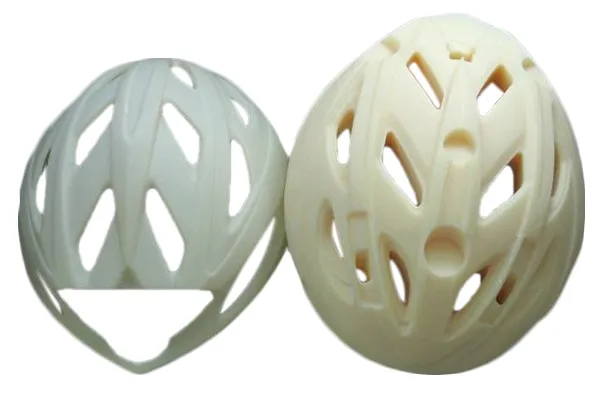
CNC machining is a strong choice when the team needs a precise prototype made from a known engineering plastic or metal. Machined parts can support load tests, fixture development, dimensional inspection, thermal checks, and assembly evaluation. The process is especially useful for thick components, simple housings, metal inserts, clear PMMA masters, or parts that are difficult to print accurately.
However, a machined prototype does not reproduce resin flow, gate marks, weld lines, molded texture, or ejection behavior. Its internal stress condition may also differ from an injection-molded part. Reviewing application examples helps a team understand where machined prototypes are sufficient and where molded samples provide better evidence.
4. When Prototype Injection Molding Becomes Necessary
Prototype injection molding becomes important when the remaining risks are connected to molding itself. Engineers may need to confirm whether resin fills a thin rib, whether a long flow path creates a weak weld line, whether a textured wall releases cleanly, or whether a housing warps after cooling.
Because the part is molded, the team can evaluate shrinkage, sink, flash, gate vestige, ejector marks, gloss variation, and repeatability. This is the difference between a prototype that represents only shape and one that represents the planned manufacturing process.
5. A Practical Stage-Gate Strategy
A cost-effective plan can use all three methods in sequence. First, use 3D printing to compare shapes and remove obvious design problems. Second, use CNC machining where strength, flatness, or tight dimensions are essential. Third, use a prototype injection mold to confirm DFM decisions, resin behavior, appearance, assembly, and process stability. Finally, build the production tool only after the important design and material risks have been reduced.
This sequence prevents production tooling from becoming the first opportunity to discover molding-related defects. It also creates clearer evidence for customers and managers at every design gate.
6. Manufacturing Capability Matters
A useful recommendation depends on the supplier's ability to manufacture and inspect the parts. In-house CNC, EDM, mold fitting, injection molding, and dimensional inspection make it easier to transfer information between stages. Reviewing the supplier's manufacturing facilities shows whether prototype machining, mold fabrication, trial molding, and measurement can be coordinated under one quality system.
7. Questions to Ask Before Selecting a Process
The correct method depends on the question the prototype must answer. Is the geometry still likely to change? Must the part use the final resin? Are weld lines, warpage, shrinkage, or gate marks important? How many identical samples are required? Will they be used for sealing, impact, thermal, or assembly tests?
Project teams can also consult the technical FAQ before requesting a quotation. Information such as 3D files, drawings, resin, quantity, target lead time, and expected mold life helps the supplier recommend a more accurate route.
Conclusion
3D printing, CNC machining, and prototype injection molding solve different development problems. Printing supports rapid visual learning. Machining supports accurate functional testing in solid materials. Prototype injection molding provides the clearest view of how the final resin and molded design may behave.
The best choice is not simply the process with the lowest quotation. It is the process that removes the most important project risk at the current stage. By matching each method to a specific validation question, teams can reduce redesign, avoid premature tooling investment, and enter production with greater confidence. A current project can be submitted through the contact page for a process review based on design maturity, material, quantity, and test requirements.
Copyright 2026(C) HUAWEI PRODUCT DEVELOPMENT INDUSTRIAL LTD (2009-2024)
All Rights Reserved
marketing@prototypeinjectionmold.com
Contact Information :
Byron Wang
Phone: +86- 86-755-8238-2595
Mobile: +86-139-2383-5403
Email: marketing@prototypeinjectionmold.com
HPDI (HUAWEI PRODUCT DEVELOPMENT INDUSTRIAL LTD)
Address:Building 3, Puxia Industrial Zone, Liuyue, Henggang St., Longgang District, Shenzhen., China