

Launching a plastic product creates a timing problem. A company may need production-quality parts for testing, pilot sales, certification, or early customer delivery, yet the final design or demand forecast may not justify a high-volume mold. Low-volume injection molding with bridge tooling fills this gap by creating a controlled path between early prototypes and mass production.
Bridge tooling is not simply a cheaper mold. It is a project strategy built around a defined quantity, resin, tolerance, validation plan, and launch schedule. The goal is to produce useful molded parts quickly while keeping the tooling investment proportional to the current risk. HPDI's low-volume injection molding services combine prototype molds, bridge molds, and molded validation parts for this stage.
1. What Is Bridge Tooling?
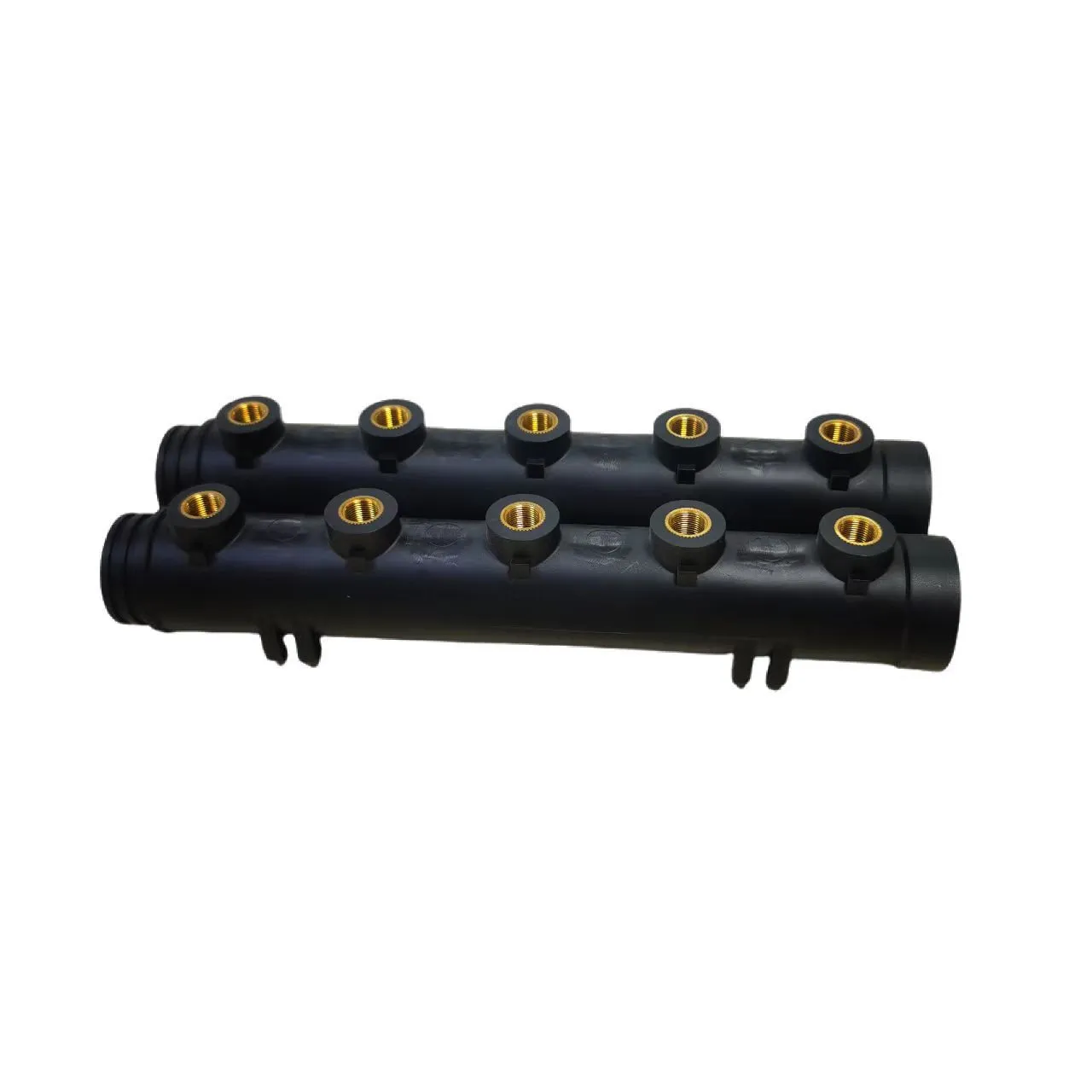
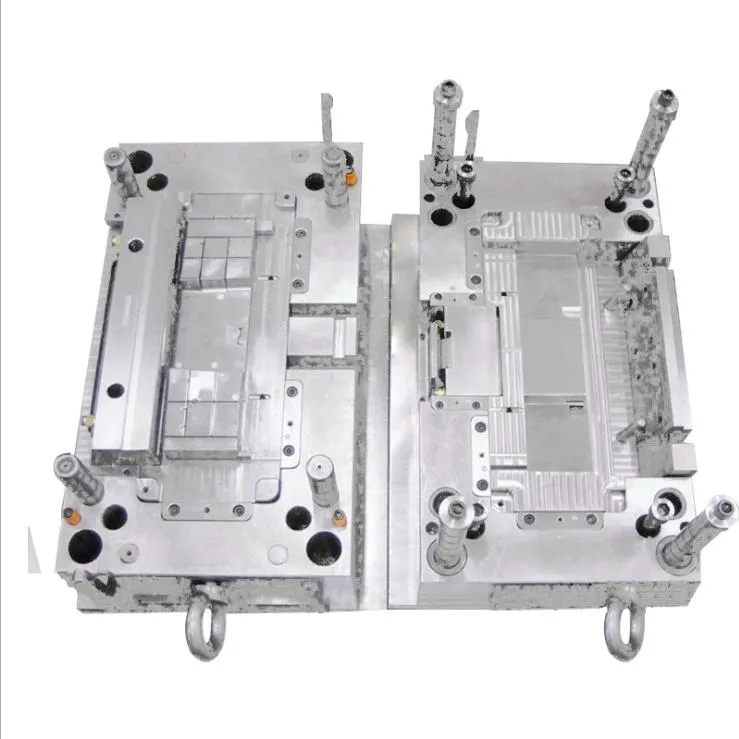
Bridge tooling is a temporary or intermediate injection mold used before a long-life production tool is released. It may be made from aluminum, pre-hardened steel, or a combination of economical mold materials and replaceable inserts.
The design is simplified only where simplification does not affect the required result. A bridge mold may use one cavity instead of several, a manual insert instead of an automated slide, or a cold runner instead of a complex hot-runner system. The mold must still protect the dimensions, surfaces, and features needed for validation.
Project Situation | Value of Bridge Tooling |
Pilot market launch | Supplies saleable parts without full production tooling |
Design verification | Reveals molding and assembly risks |
Certification or functional testing | Provides repeatable parts in the intended resin |
Uncertain demand | Limits early financial exposure |
Production-tool delay | Maintains temporary supply |
Specialized low annual volume | Avoids overbuilding the mold |
2. Why Companies Use Low-Volume Injection Molding
Low-volume molding is useful when demand exists but is not yet stable. A project may need several hundred or several thousand parts for pilot production, field evaluation, replacement inventory, specialized equipment, or a regional launch.
It also allows engineers to evaluate the intended thermoplastic and the molding process. Unlike a visual prototype, a molded part can reveal shrinkage, warpage, weld lines, gate vestige, ejection marks, surface variation, and batch consistency. Published project examples help buyers see how prototype molds and molded parts support development before mass production.
3. Cost Control Without Losing the Test Objective
The lowest tooling price does not always create the lowest total project cost. If an overly simplified mold cannot reproduce the feature being tested, the data may be misleading.
For a sealing housing, the tool must control the flange and gasket interface. For a snap-fit part, the resin, rib geometry, and local shrinkage must be realistic. For a cosmetic cover, gate position, texture, gloss, and ejection need to represent the intended product.
Cost should be reduced in noncritical areas. Common approaches include using a single cavity, limiting automation, selecting practical mold steel, simplifying hidden features, and using replaceable inserts where design changes are likely.
4. A Typical Bridge-Tooling Workflow
The first step is to define the quantity and purpose. The supplier should know whether the parts are for engineering tests, pilot sales, field trials, spare parts, or temporary production. The reason for the quantity determines the mold strategy.
Next, a focused DFM review covers wall-thickness changes, draft, ribs, bosses, undercuts, gate location, ejection, cosmetic surfaces, and critical dimensions. The team identifies which features must represent production and which may be simplified.
The resin should match the planned performance as closely as possible. Tool material is selected according to part size, abrasiveness, expected shots, texture, tolerance, and repair needs. In-house CNC, EDM, mold fitting, injection presses, and inspection equipment make it easier to complete the workflow without losing information. The facilities page summarizes equipment used for mold fabrication and trial production.
After manufacture and assembly, the first trial checks filling, flash, sink, weld lines, deformation, surface quality, dimensions, and ejection. Process settings should be recorded for later production planning.
5. How Bridge Tooling Reduces Investment Risk
A production mold commits capital to a specific geometry, cavity count, runner system, cooling design, cycle time, and demand forecast. If one of those assumptions changes, modification can be expensive.
Bridge tooling delays part of that commitment. It allows the team to learn from real molded parts and market response before scaling capacity. The company can confirm whether the product functions, whether customers accept it, and whether forecast demand is realistic.
6. Planning the Upgrade to Production Tooling
The bridge project should finish with documented learning. Trial reports, approved samples, resin data, dimensional results, process settings, defect history, and maintenance observations should be retained.
The production mold may require hardened steel, several cavities, automatic slides, a hot runner, faster cooling, robotic removal, or additional sensors. Bridge-tool data helps engineers decide which upgrades are necessary instead of relying only on assumptions.
Before requesting a quote, buyers can review the FAQ for the information normally required, including 3D files, drawings, cavity expectations, resin, lead time, and guaranteed mold shots.
Conclusion
Low-volume injection molding with bridge tooling provides a practical manufacturing step between prototypes and mass production. It supplies repeatable parts in the intended resin, reveals molding-related risks, supports pilot demand, and limits early capital exposure.
The best bridge tool is a purpose-built validation and supply solution. When quantity, test objectives, critical features, and the upgrade plan are clearly defined, bridge tooling can shorten market entry while protecting the larger production investment. Companies preparing a pilot batch can use the contact page to submit part data and receive an initial review.
Copyright 2026(C) HUAWEI PRODUCT DEVELOPMENT INDUSTRIAL LTD (2009-2024)
All Rights Reserved
marketing@prototypeinjectionmold.com
Contact Information :
Byron Wang
Phone: +86- 86-755-8238-2595
Mobile: +86-139-2383-5403
Email: marketing@prototypeinjectionmold.com
HPDI (HUAWEI PRODUCT DEVELOPMENT INDUSTRIAL LTD)
Address:Building 3, Puxia Industrial Zone, Liuyue, Henggang St., Longgang District, Shenzhen., China