

Rapid Injection Molding vs. Conventional Tooling: A Comparison Guide
Introduction
Rapid injection molding and conventional production tooling use the same basic molding principle, but they are designed around different business goals. Rapid tooling focuses on speed, design validation and lower initial commitment. Conventional tooling focuses on long-term output, automation and the lowest practical unit cost at stable volume. Product teams often make better decisions when they stop asking which process is ‘better’ and instead ask which tool matches the current stage of development. HPDI’s service page covers prototype molds, bridge molds, rapid molds and low-volume molding for projects that are not yet ready for full-scale tooling.
Rapid Injection Molding vs. Conventional Tooling Comparison
| Factor | Rapid Injection Molding | Conventional Tooling |
|---|---|---|
| Primary goal | Validation and low volume | Stable mass production |
| Initial investment | Lower to moderate | Higher |
| Design flexibility | Higher | Lower after qualification |
| Automation | Limited / selective | Often extensive |
| Best quantity | Prototype to low volume | Medium to high volume |
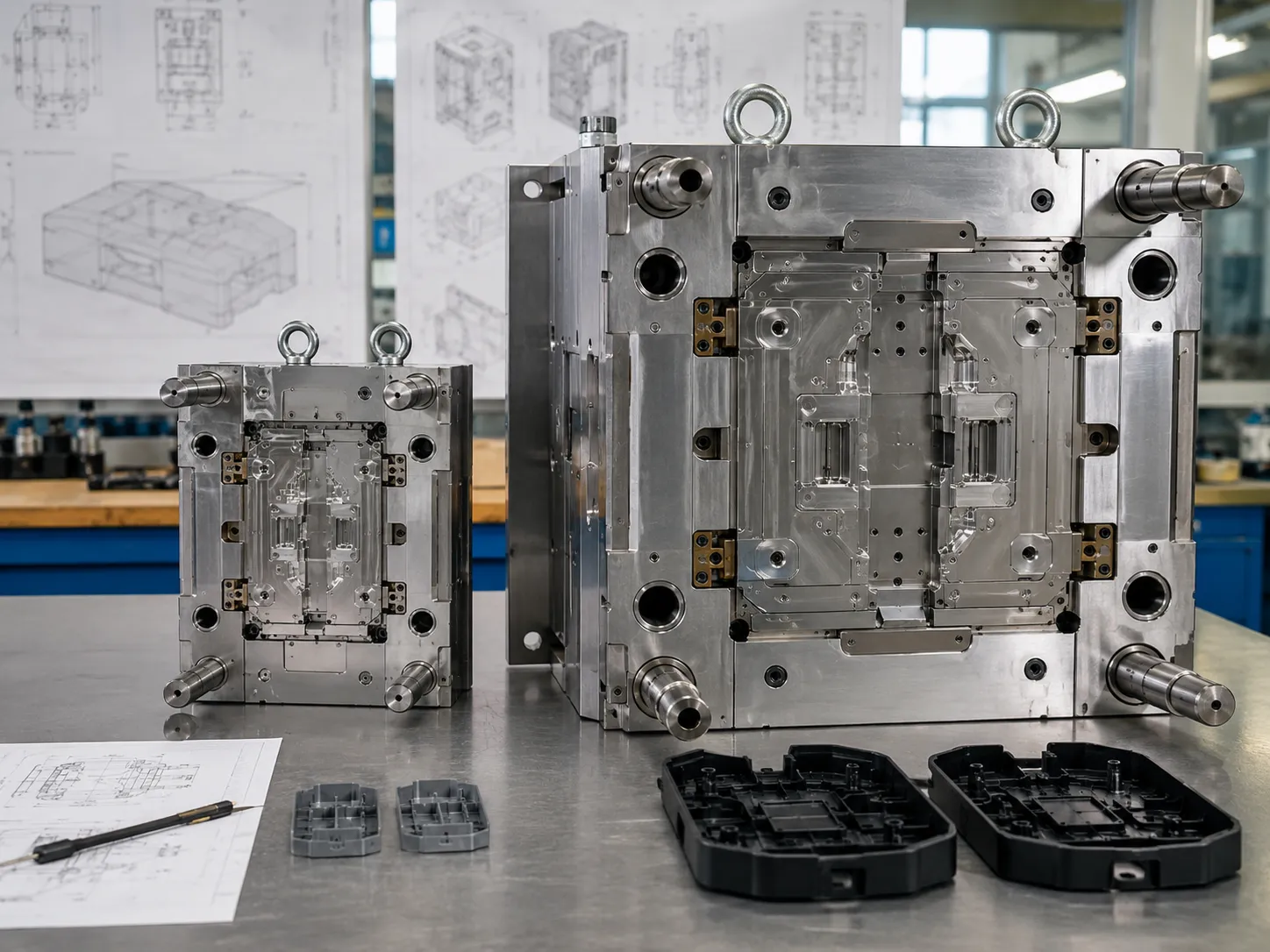
1. Rapid Tooling Prioritizes Learning and Speed
A rapid mold is usually simplified where possible. It may use fewer cavities, manual inserts, a standard mold base or less complex automation. These choices can reduce design and machining time. The objective is to produce representative molded parts quickly enough to test material, geometry, assembly and molding behavior. If a feature fails, the team can revise it before committing to a more expensive multi-cavity production tool.
2. Conventional Tooling Prioritizes Capacity and Tool Life
A production mold is designed for repeatability over a much larger number of cycles. It may use hardened tool steel, hot runners, automatic slides, advanced cooling, sensors and robotic part handling. The engineering effort is justified when demand is stable because improvements in cycle time and automation reduce cost per part. However, these same features can make late design changes more expensive. This is why production tooling is normally best after the product geometry and material have been validated.
3. Lead Time Differences Come from Tool Complexity
Rapid tooling can be faster because the design is intentionally limited to what the validation or low-volume program needs. Conventional molds take longer because more work is required for cavity layout, cooling, automation, durability and production qualification. A complex rapid mold can still take significant time, while a simple production mold may be relatively straightforward. Lead time should therefore be discussed in relation to the actual geometry, not treated as a fixed number.
4. Material Validation Is a Major Advantage of Rapid Injection Molding
Because rapid injection molding can use the intended production thermoplastic, engineers can evaluate shrinkage, flow, weld lines, fiber orientation, surface appearance and assembly performance. This information is more representative than a prototype made from a substitute material. The molded prototype examples on HPDI’s site describe how production-like molded prototypes can reveal process or material issues before mass production.
5. Cost Comparison Depends on Total Program Volume
Rapid tooling normally has a lower initial investment but a higher unit cost at larger volumes because there may be fewer cavities and more manual handling. Conventional tooling has a higher upfront cost but can become more economical once the quantity is large enough to justify automation and greater productivity. If demand is uncertain, a bridge-tool approach can reduce risk: validate and launch with rapid tooling, then move to a production mold when the forecast becomes clearer.
6. Design Changes Are Easier Earlier
Development programs benefit from preserving flexibility. A manual insert or local steel-safe feature in a rapid mold can be adjusted more easily than a complex automated mechanism that has already been hardened and qualified. This does not mean rapid tooling should be poorly engineered. Gate location, venting, cooling and ejection still need to be reviewed carefully because the purpose is to generate meaningful production information.
7. Supplier Capability Still Matters
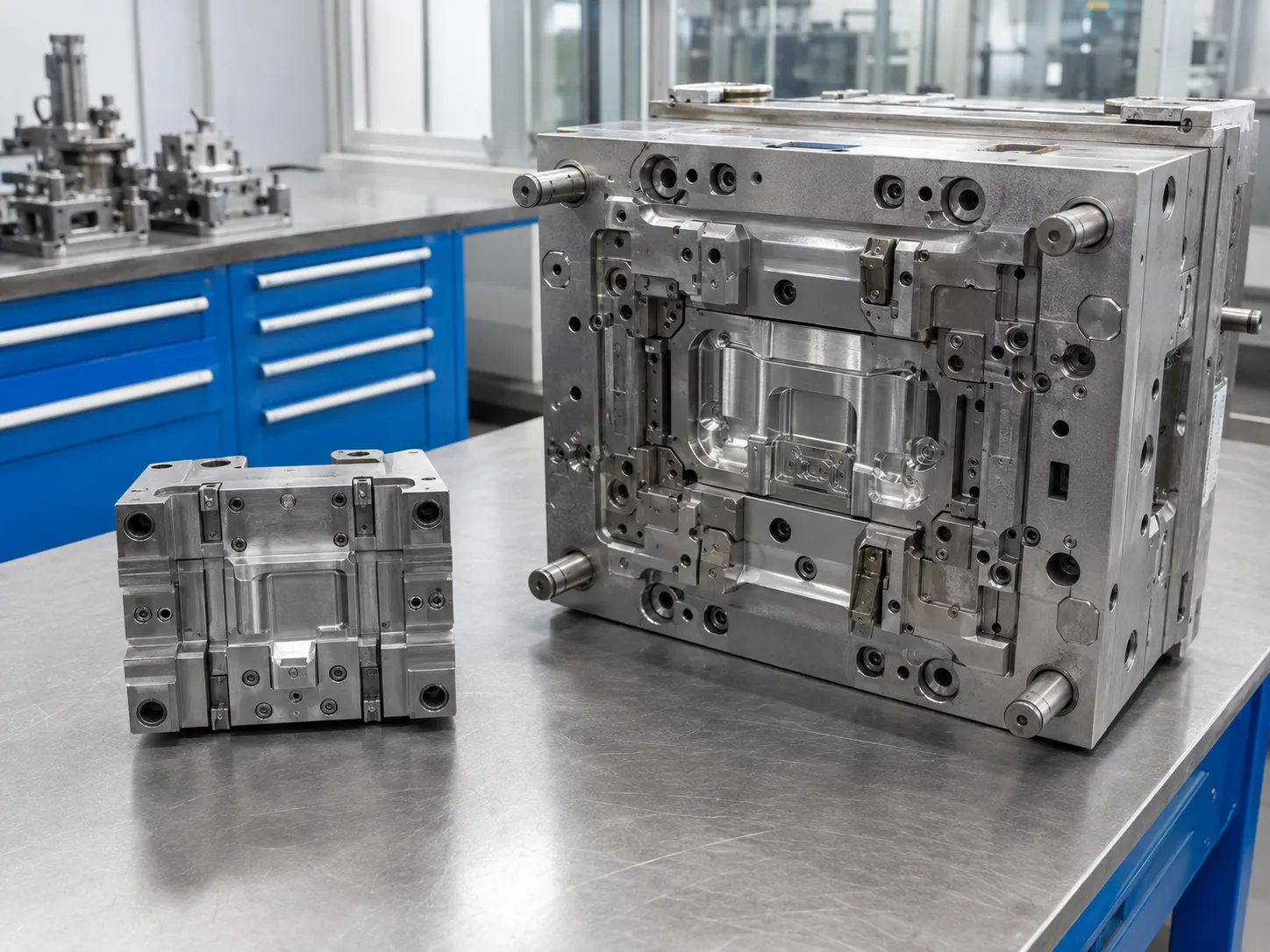
Rapid does not mean uncontrolled. The mold maker should have suitable CNC and EDM equipment, molding machines, inspection capability and experienced toolmakers. The facilities page gives an overview of the equipment HPDI uses for prototype mold manufacturing and injection molding. For quotations, the FAQ also outlines the typical CAD, drawing, resin and tool-life information needed to assess a project.
Additional Planning Consideration
The decision should also consider organizational speed. A rapid mold can give engineering, purchasing and marketing teams real parts earlier, allowing several workstreams to progress in parallel. A production mold may deliver lower long-term unit cost, but if the design is not frozen, time lost waiting for a complex tool can outweigh early savings. Development timing is therefore part of the cost model, not a separate concern.
Practical Project Tip
Before tooling approval, hold a short review with design, manufacturing, quality and purchasing. Confirm the drawing revision, resin, quantities, critical dimensions, cosmetic requirements, expected tool life and approval process. This simple cross-functional check prevents many quotation and tooling changes caused by different teams working from different assumptions.
Conclusion
Choose rapid injection molding when the priority is fast learning, production-material validation, pilot quantities and lower initial commitment. Choose conventional production tooling when the design is stable, demand is proven and long-term efficiency matters more than design flexibility. Many projects use both: rapid tooling first, production tooling second. That sequence allows engineering risk to be removed before the largest tooling investment is made. For a project-specific comparison, submit the part data and expected quantities through the contact page.