

Injection Molded Parts Validation: 7 Steps Before Production
Introduction
An injection molded part is not production-ready simply because it fills the cavity and looks acceptable. Before scale-up, engineers need to confirm that the geometry, material, mold design and process can produce parts that meet functional requirements repeatedly. Validation is therefore a sequence of checks rather than a single inspection step. Prototype injection molding makes this process more practical because the design can be tested using production-like resin and molding conditions. HPDI’s prototype injection molding services are designed around this pre-production validation stage.
Injection Molded Parts Validation Steps
| Validation Step | What It Checks | Typical Output |
|---|---|---|
| DFM | Manufacturability risks | Design recommendations |
| Mold trial | Fill, ejection, visible defects | Stable processing window |
| Dimensional inspection | Critical geometry | Measurement report |
| Functional / assembly test | Real product performance | Pass/fail or redesign data |
| Pilot batch | Repeatability | Production readiness evidence |
1. DFM Review Comes Before the First Mold Trial
Validation begins before the tool is built. A DFM review identifies potential problems involving wall thickness, draft, ribs, bosses, undercuts, gate location, parting lines and ejection. Engineers should also mark critical dimensions and explain how the part functions in the assembly. This lets the mold designer prioritize the features that must be controlled rather than treating every dimension as equally important.
2. First Mold Trials Check Fill and Basic Process Behavior
The first trial is used to observe whether the cavity fills consistently and whether the part releases without damage. Typical checks include short shots, flash, sink, weld lines, burn marks, gate appearance and visible warpage. Process settings such as melt temperature, mold temperature, injection speed, packing pressure and cooling time are adjusted to establish a workable molding window. The goal is not to hide a design problem with extreme settings, but to find a stable process that can be repeated.
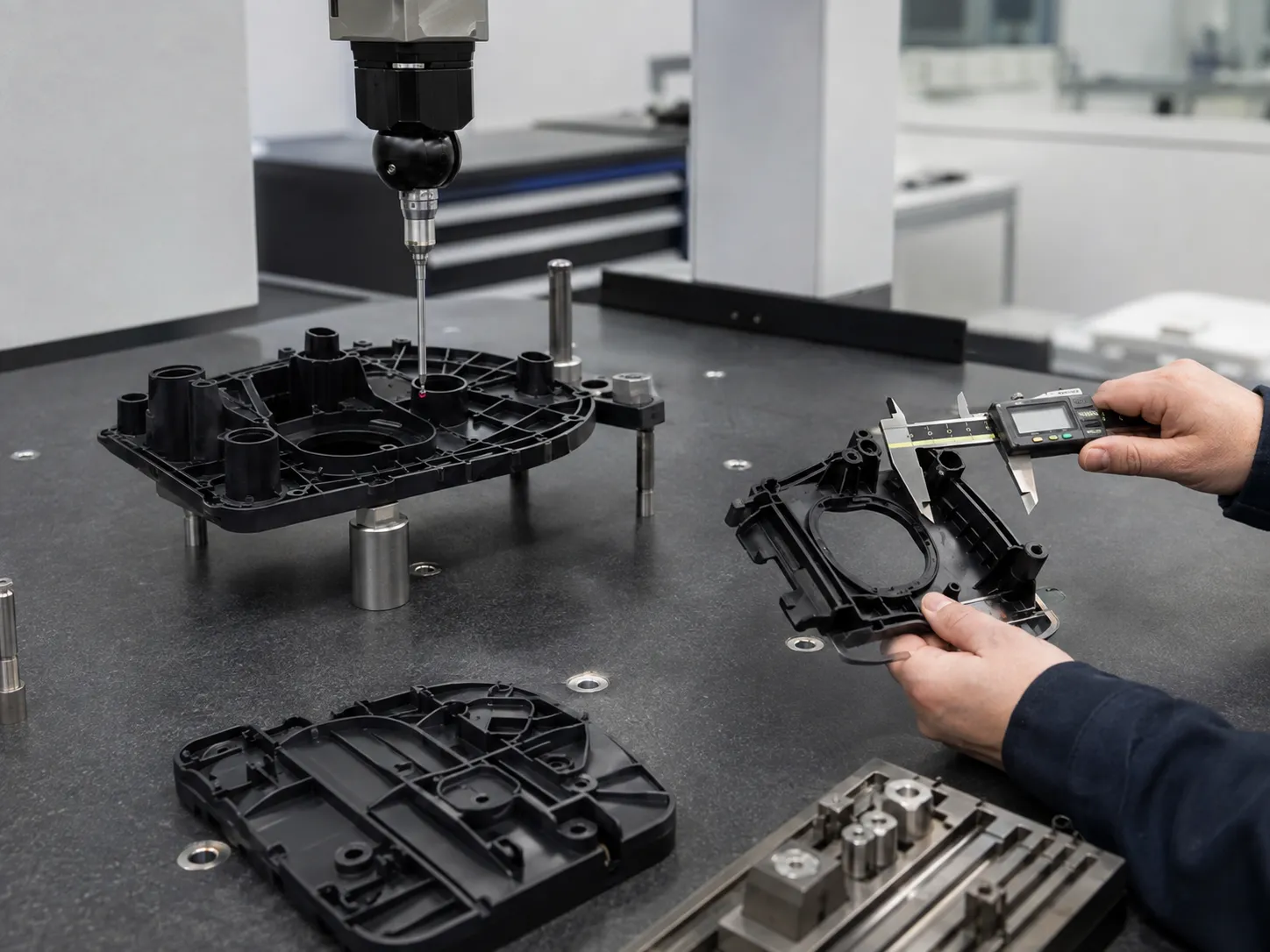
3. Dimensional Inspection Confirms Critical Geometry
After the process is reasonably stable, parts are measured. Critical interfaces, sealing areas, snap locations, bearing fits and assembly references receive the most attention. Some resins need conditioning before final measurement because dimensions can change after molding. Measurement should therefore follow a consistent timing and environmental method. HPDI’s facilities overview includes dimensional measurement resources used alongside mold manufacturing and injection molding.
4. Material Behavior Must Be Verified in the Molded Part
Datasheets provide valuable baseline properties, but the final component is affected by molding. Fiber orientation, weld lines, residual stress and local thickness can change how the part behaves. Mechanical tests, drop tests, torque tests, environmental exposure or customer-specific evaluations may be needed depending on the product. Prototype molding is useful because the same intended resin can be evaluated before production tooling is finalized.
5. Assembly Testing Reveals Tolerance Stack Problems
A part can meet its individual drawing and still cause trouble when assembled with other components. Validation should check screws, clips, press fits, connectors, seals, hinges and mating surfaces in the real assembly. Repeated assembly can expose cracks, stress whitening or retention loss. If multiple molded components interact, tolerance stack analysis should be compared with actual build results rather than relying only on nominal CAD dimensions.
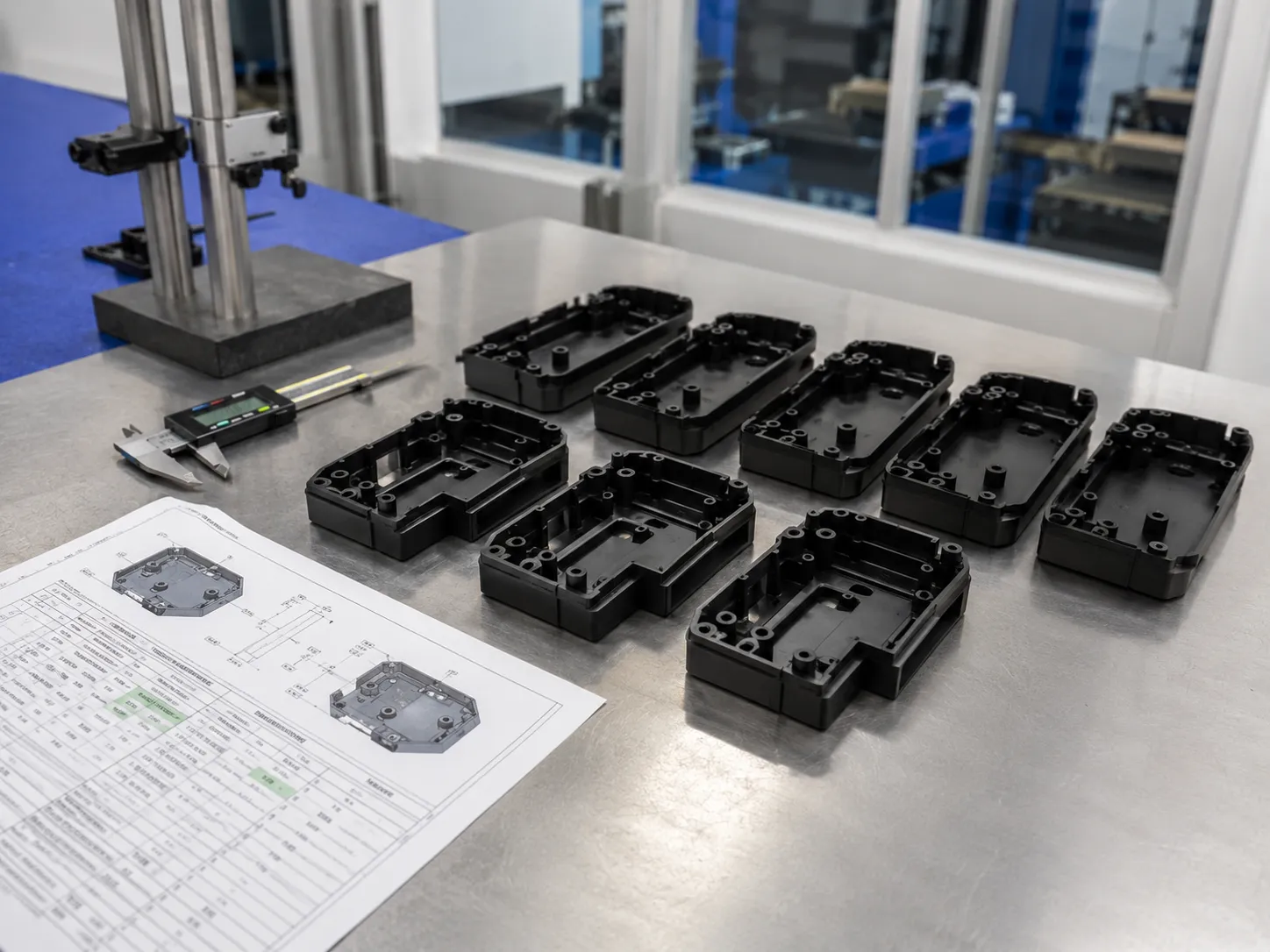
6. Pilot Batches Test Repeatability
Ten good parts do not guarantee a stable production process. A pilot batch allows the team to study variation over more cycles and during normal handling. It can reveal dimensional drift, inconsistent cosmetics, operator issues, packaging damage and assembly yield losses. The case study page is a natural internal reference for how molded prototypes and small-volume parts support product development before mass production.
7. Record Changes and Approved Conditions
Validation becomes much more valuable when the results are documented. Keep the CAD revision, resin grade, mold changes, process settings, inspection results and approved samples together. If the production mold is built later, this package helps the production team avoid repeating problems that were already solved during prototyping. The FAQ explains the type of technical information normally requested at the start of a mold project.
Additional Planning Consideration
A strong validation plan also defines acceptance criteria before testing begins. If teams wait until results are available to decide what is acceptable, decisions can become inconsistent. For each critical feature, specify the measurement method, sample conditioning, pass/fail limits and whether a failure requires a design change, a tool adjustment or a processing study. This turns prototype molding into a controlled engineering experiment.
Practical Project Tip
Before tooling approval, hold a short review with design, manufacturing, quality and purchasing. Confirm the drawing revision, resin, quantities, critical dimensions, cosmetic requirements, expected tool life and approval process. This simple cross-functional check prevents many quotation and tooling changes caused by different teams working from different assumptions.
Additional Validation Note
Where possible, keep a small set of approved reference parts from each important trial. These samples provide a physical baseline for later comparisons of color, gloss, gate vestige, flash and assembly feel. When the process or tool is changed, the new parts can be compared against the reference set, making discussions between engineering, quality and the mold supplier more objective and easier to document.
Conclusion
Injection molded parts should be validated as part of a system: design, material, tool, process, inspection and assembly. Prototype molds and pilot production allow problems to be discovered while changes are still manageable. By combining DFM, controlled mold trials, dimensional measurement, functional testing and repeatability checks, teams can enter production with stronger evidence and fewer unknowns. For a project-specific validation plan, drawings and requirements can be submitted through the contact page.