

Medical Injection Molding for Prototype and Pilot Production
Introduction
Medical product development often requires more than a visual prototype. Housings, connectors, cartridges, instrument components and internal structural parts may need to be evaluated for assembly, strength, dimensional stability, chemical resistance and production repeatability.
Medical injection molding at the prototype and pilot stage allows engineering teams to evaluate components made from the intended thermoplastic before investing in full production tooling. HPDI’s prototype and low-volume molding services support development programs where production-like molded parts are required for engineering verification.
| Development Stage | Main Goal | Typical Output |
|---|---|---|
| Concept prototype | Confirm form and basic fit | 3D printed or machined parts |
| Prototype injection molding | Validate resin and molded behavior | Production-like molded samples |
| Pilot production | Evaluate repeatability and assembly | Small controlled batch |
| Production tooling | Scale a stable design | Qualified production parts |
1. Define the Medical Part’s Intended Use and Risk
Before selecting a resin or mold structure, document how the component will be used. Does it contact a patient, fluid, reagent or medication? Is it reusable or disposable? Will it be sterilized or repeatedly cleaned? Is the part load-bearing, cosmetic, transparent or part of a sealed assembly?
These questions influence material selection, tolerances, surface requirements and validation planning. Regulatory requirements should be defined by the device manufacturer and its quality system for the specific application.
2. Select Medical Plastics for the Actual Service Environment
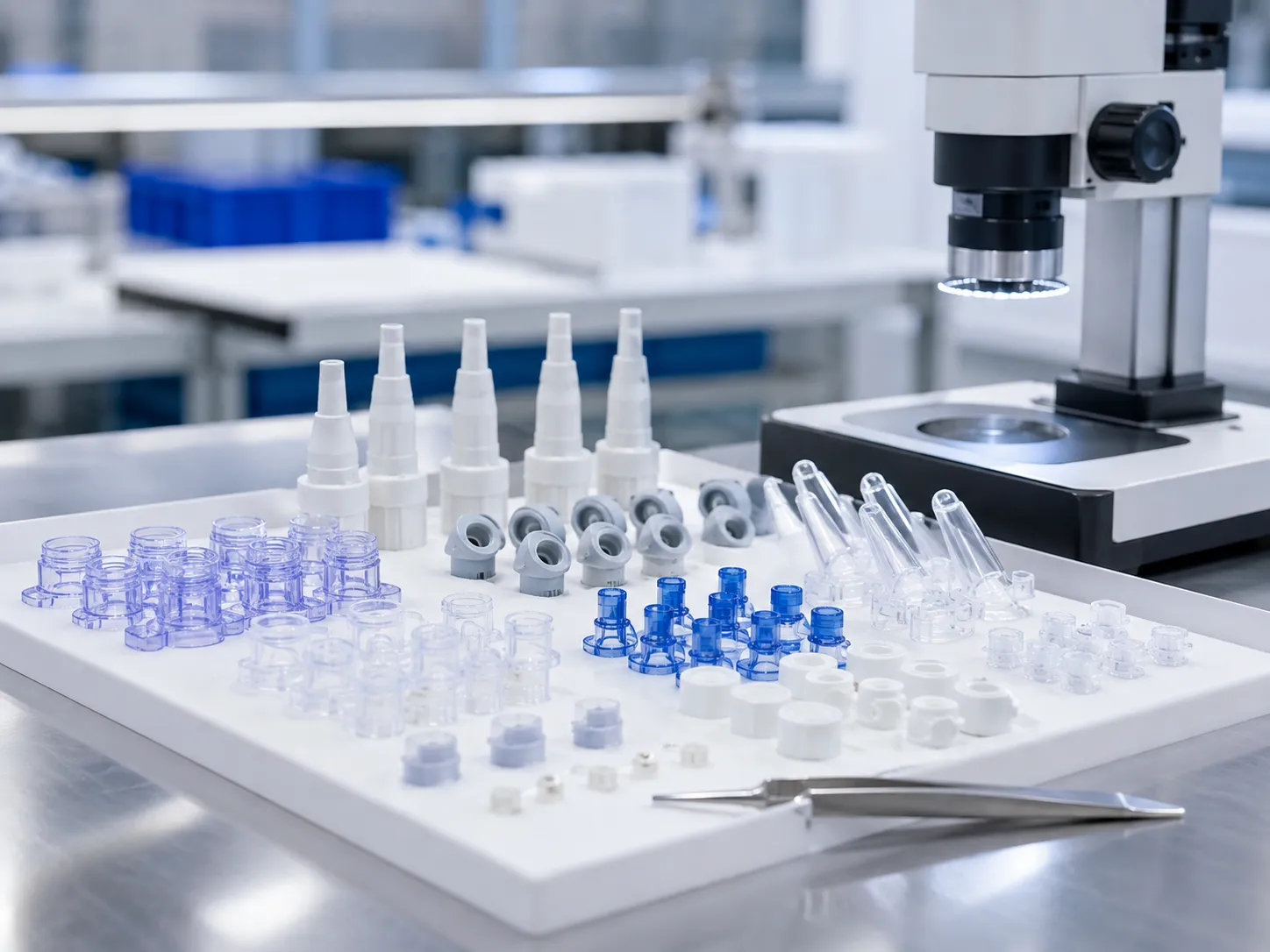
Medical plastics may be selected for impact resistance, transparency, chemical compatibility, dimensional stability, temperature resistance or sterilization performance. PP, PC, ABS, PC-ABS, POM, TPE and high-performance engineering resins can each be appropriate for different applications.
There is no universal medical plastic. The specific resin grade, additives, colorants and supplier documentation need to match the device’s intended use and validation plan.
3. Use DFM to Protect Cleanability, Assembly and Function
Design for manufacturability should review wall thickness, draft, ribs, bosses, weld lines, gate location, ejector marks and parting lines. For medical equipment, it may also be important to avoid unnecessary crevices or geometric features that complicate cleaning and assembly.
A gate mark that is acceptable inside a housing may be unsuitable on a sealing surface. Critical dimensions should therefore be clearly identified so that mold design, process control and inspection can focus on the features that matter most.
4. Prototype Tooling Provides Production-Like Evidence
A prototype mold can use a simplified tooling structure while still molding the intended production resin in an injection molding machine. This allows engineers to evaluate shrinkage, warpage, assembly force, screw-boss strength, snap-fit behavior and molded surface quality.
The prototype molding case studies illustrate how molded prototypes can help identify process or material problems before mass-production tooling is committed.
5. Pilot Production Tests More Than Individual Parts
A few molded samples may validate geometry, but a pilot batch can reveal process variation, assembly yield, handling issues, packaging damage and inspection bottlenecks.
This becomes important before a production mold is expanded to more cavities or connected to automated equipment. Pilot quantities may also support engineering builds, field evaluation or other product-specific verification activities defined by the manufacturer.
6. Focus Inspection on Critical-to-Quality Features
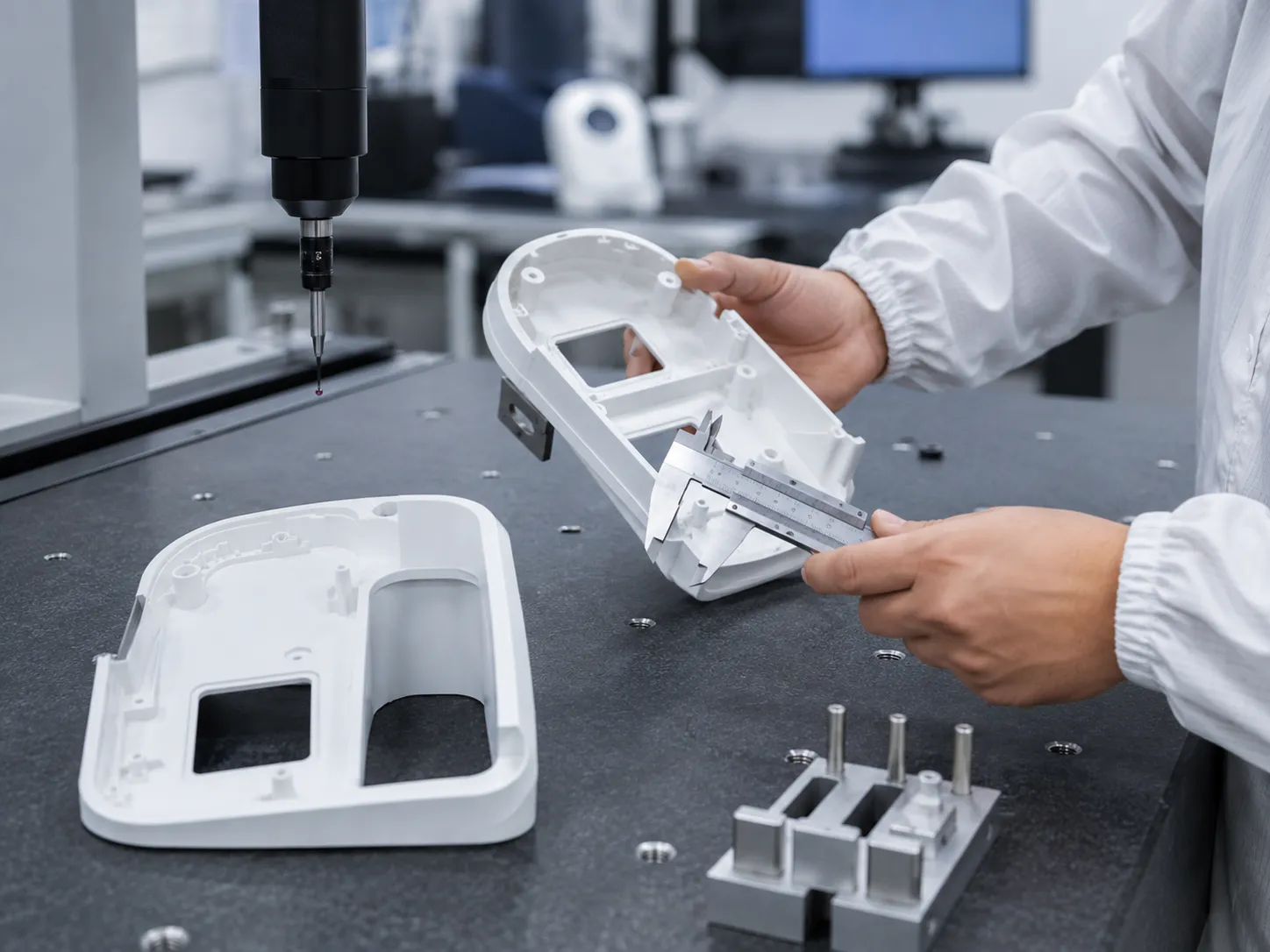
Medical components often contain dimensions that matter more than others, including sealing surfaces, mating features, sensor positions, wall interfaces and alignment references. A practical inspection plan separates critical-to-quality features from reference dimensions.
Dimensional reports, visual standards and functional gauges can then be matched to the engineering risk. HPDI’s mold manufacturing and inspection facilities show resources used for prototype tooling, molding and dimensional measurement.
7. Maintain Traceability During Medical Product Development
Even before formal mass production, it is useful to maintain clear records of CAD revisions, resin grades, mold changes, molding settings and sample approvals. This helps engineering teams understand why one build differs from another and allows validated learning to transfer into the production mold.
The prototype injection molding FAQ outlines information commonly used for quotation and project planning, while the contact page provides a direct route for submitting drawings and project requirements.
8. Align Engineering, Quality and Mold Supplier Expectations
For medical product development, communication between product engineering, quality and the mold supplier should begin early. The mold maker needs to know which dimensions and surfaces are critical, while the quality team needs to understand what the prototype process can and cannot demonstrate.
Aligning these expectations helps prevent a prototype batch from being treated as formal qualification when it was intended primarily for engineering learning and risk reduction.
9. Complete a Cross-Functional Tooling Review Before Approval
Before tooling approval, hold a short review with design, manufacturing, quality and purchasing. Confirm the drawing revision, resin grade, quantities, critical dimensions, cosmetic requirements, expected tool life and approval process.
This cross-functional review reduces quotation changes, tooling revisions and approval delays caused by different teams working from different assumptions.
10. Define How Nonconforming Pilot Parts Will Be Controlled
Pilot-production planning should define how nonconforming molded parts will be handled. Even a development batch benefits from simple rules for segregation, reinspection and disposition.
This prevents questionable samples from entering engineering tests and gives the mold team clearer feedback about recurring defects. The same discipline also makes it easier to transfer lessons from prototype tooling into the later production quality plan.
Conclusion
Medical injection molding for prototype and pilot production is most valuable when it is treated as a structured engineering stage rather than simply as a way to obtain sample parts.
Material selection, DFM, prototype tooling, controlled molding, CTQ inspection and pilot builds work together to identify risks before production scale increases. This creates a stronger handoff from engineering verification to stable manufacturing and reduces the risk of discovering fundamental part or process issues after the final production tool has been committed.