

Choosing a plastic resin from a datasheet is only the beginning of material validation. The same resin can behave differently after it is dried, heated, injected through a gate, packed under pressure and cooled inside a real mold. For product teams approaching design freeze, prototype injection molding provides a practical way to evaluate the intended production material under realistic manufacturing conditions before a high-volume mold is approved.
HPDI uses simplified prototype molds, aluminum molds and bridge tooling to produce development-stage molded parts. The purpose is not to imitate every feature of a production tool; it is to create enough manufacturing realism to expose material, geometry and process risks while changes are still manageable. Engineers can review the broader prototype injection molding service when planning this stage.
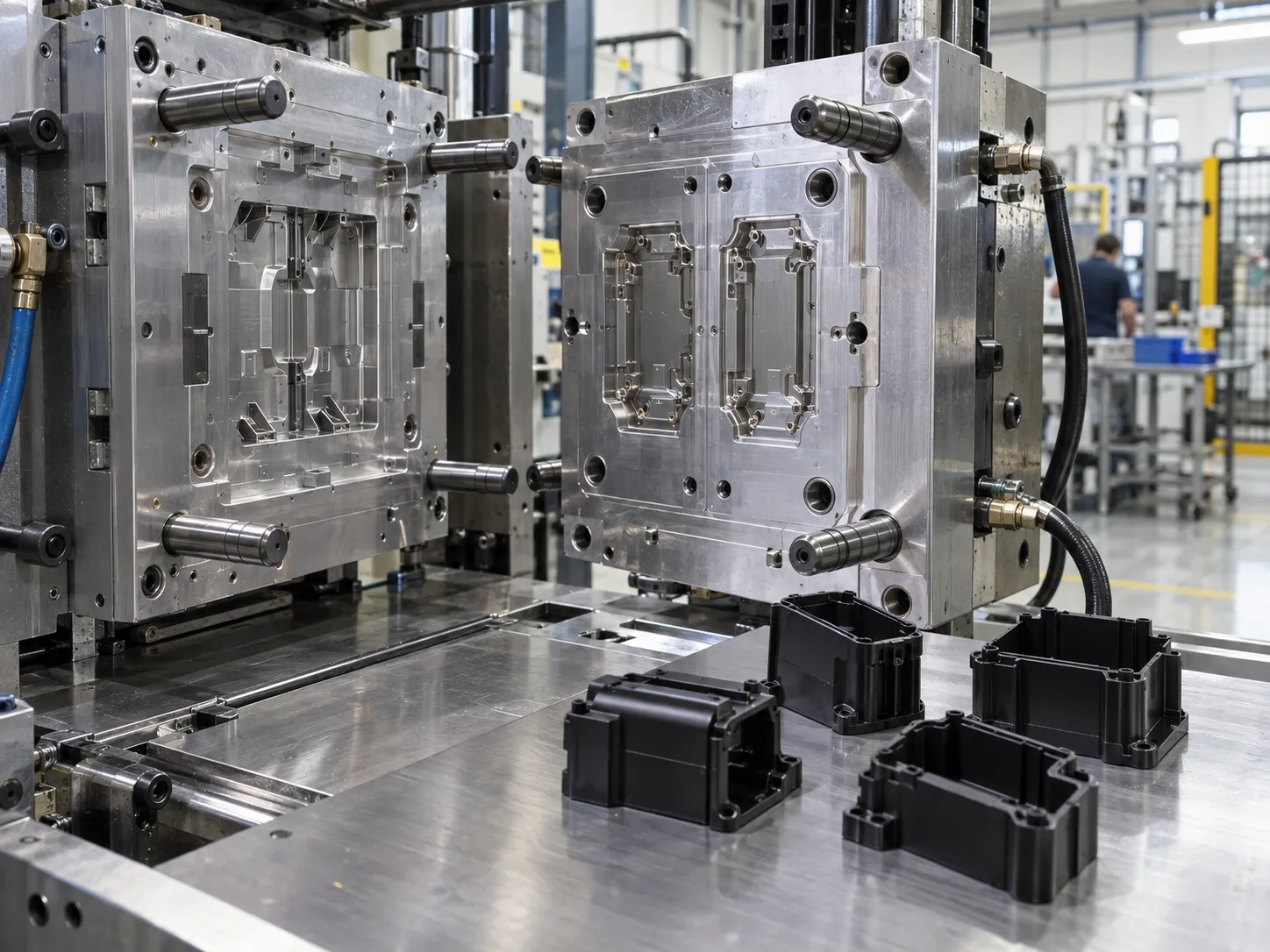
Why does a production resin need molded validation?
A tensile bar or supplier datasheet cannot fully represent a finished housing, bracket or connector. Real parts contain ribs, bosses, varying flow lengths, snap-fits, holes and local thickness changes. These features influence filling, cooling and shrinkage. Injection-molded prototypes allow the engineering team to see whether the selected resin fills thin sections, maintains critical geometry, releases from the mold and supports the intended assembly.
This is especially important when the final component relies on stiffness, impact resistance, dimensional stability, chemical resistance or repeated mechanical loading. The correct question is not simply whether the resin has suitable nominal properties, but whether those properties remain useful in the actual molded geometry.
What should engineers check during material validation?
A useful validation plan starts with a short list of product-specific risks. Typical checks include molded dimensions after conditioning, flatness, snap-fit behavior, screw-boss strength, surface appearance, weld-line location, gate vestige, local sink and assembly clearance. For parts that mate with metal or electronic components, dimensional change after molding may be more important than cosmetic appearance.
If the part is still changing, the design should also be reviewed for manufacturability. HPDI already maintains a separate DFM checklist for prototype injection-molded parts, which can be used before tool release to identify wall-thickness, draft, rib, boss and ejection risks.
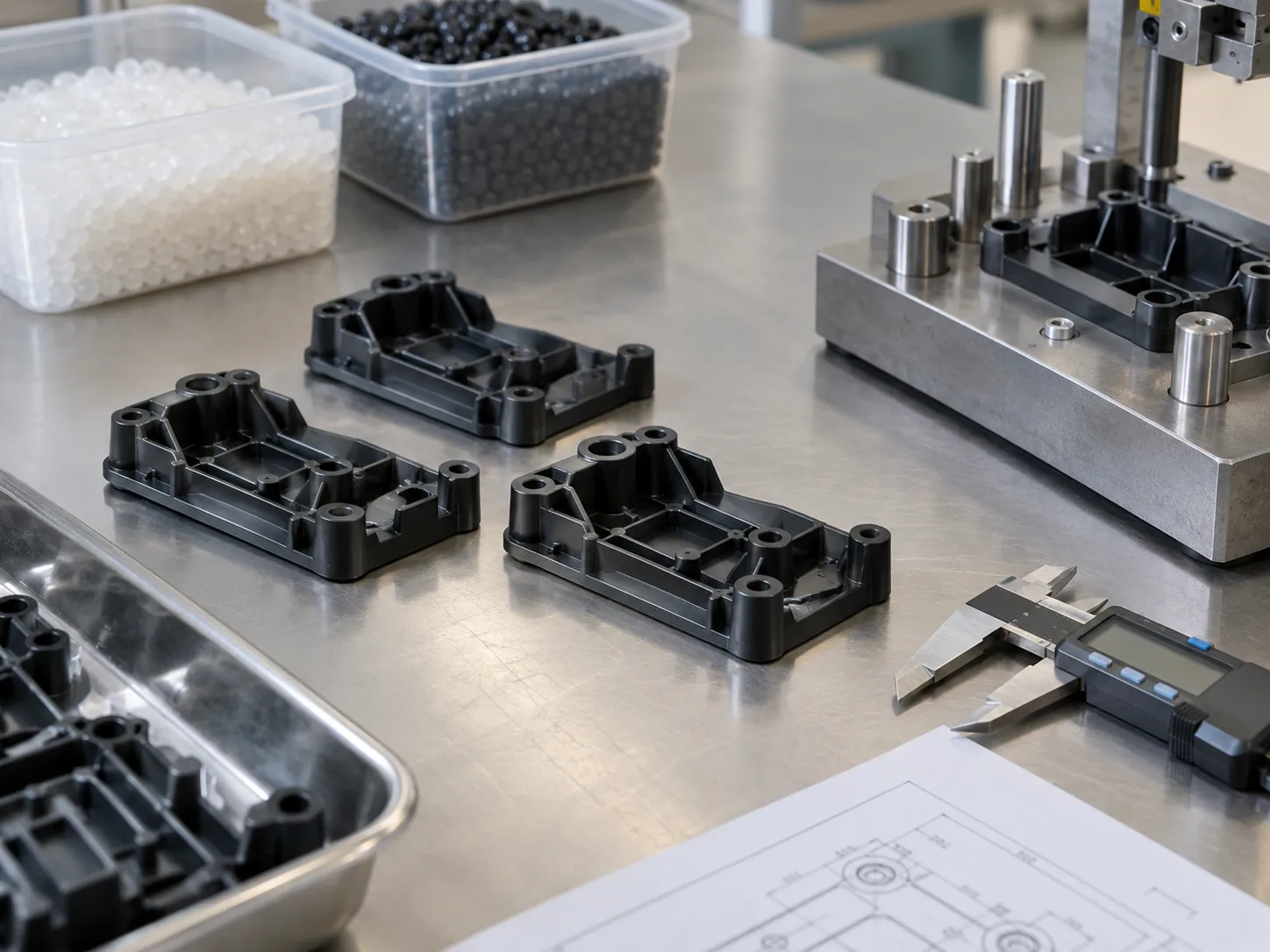
How do material and mold design interact?
The mold cannot be separated from the material decision. A resin with higher viscosity may need a different gate size or flow path. A material with greater shrinkage may require different cavity compensation. Reinforced materials can create directional shrinkage and may also increase wear around gates and sliding areas. A resin that needs a warmer mold may change the cooling strategy compared with an easy-flowing commodity plastic.
This is why prototype tooling should be reviewed together with the intended material. Simplified steel or aluminum tooling can be selected according to geometry, expected use, resin behavior and likely engineering changes rather than by a fixed “prototype mold” formula.
What makes the molded sample useful for decision-making?
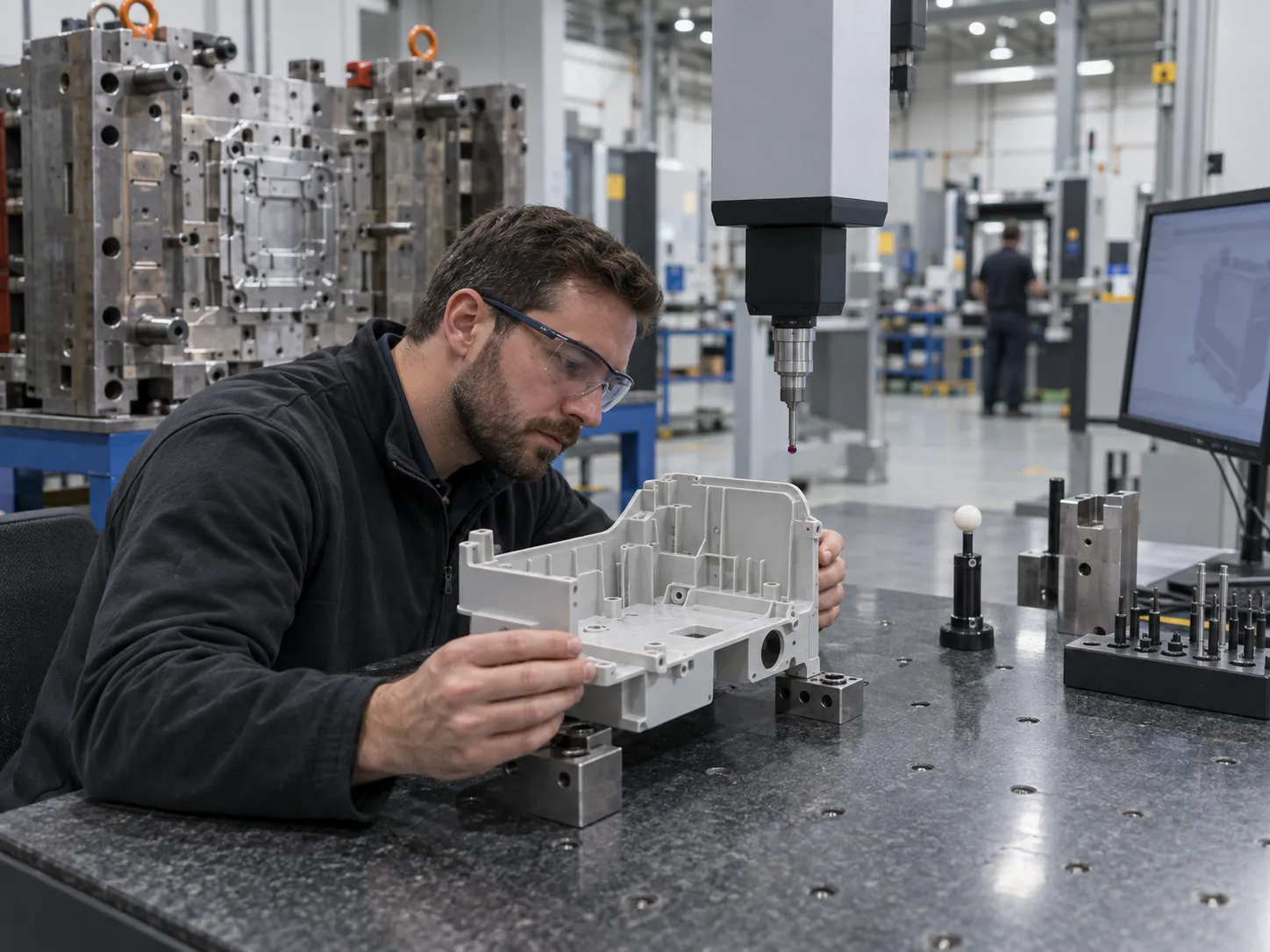
A molded sample becomes engineering evidence when the team records the process and measures the features that matter. The molding team should document material preparation, mold condition and the stable settings used for the approved samples. The product team should then compare the molded parts against controlled drawings and assembly requirements.
HPDI’s facilities combine mold machining, injection molding and dimensional inspection, which supports a single validation loop from tool changes to new samples and re-measurement. The goal is not to create a large report for its own sake; it is to separate design issues from material issues and process issues.
How should results be transferred to production tooling?
The strongest prototype program ends with a short transfer package. It should capture the approved resin grade, final CAD revision, critical dimensions, successful gate concept, known shrinkage or warpage behavior, useful molding observations and any changes made after the first trial. These records help the production mold team avoid repeating problems already discovered during development.
For teams comparing molded parts with machined or printed prototypes, the existing guide on prototype injection molding versus 3D printing and CNC machining explains why the manufacturing process itself matters during late-stage validation.
A practical material-validation sequence
-
Confirm the intended production resin and the product functions that depend on it.
-
Complete DFM review and mark critical dimensions.
-
Select a simplified steel or aluminum prototype mold strategy.
-
Mold initial samples and establish a stable process window.
-
Inspect dimensions, appearance and assembly behavior.
-
Correct design, tooling or process issues separately.
-
Re-test the revised parts and transfer approved findings to production tooling.
This sequence keeps the prototype program focused on decisions rather than on producing samples without a defined test purpose.
Conclusion
Prototype injection molding is most valuable when it answers a specific production question: will the intended resin, part geometry and molding approach work together reliably? By validating the material in an actual molded component, engineers can identify shrinkage, warpage, assembly, strength and process problems before those issues become expensive production-tool changes.
For a project-specific review, engineering teams can contact HPDI with the 3D model, drawing, intended resin and validation objectives.
Copyright 2026(C) HUAWEI PRODUCT DEVELOPMENT INDUSTRIAL LTD (2009-2024)
All Rights Reserved
marketing@prototypeinjectionmold.com
Contact Information :
Byron Wang
Phone: +86- 86-755-8238-2595
Mobile: +86-139-2383-5403
Email: marketing@prototypeinjectionmold.com
HPDI (HUAWEI PRODUCT DEVELOPMENT INDUSTRIAL LTD)
Address:Building 3, Puxia Industrial Zone, Liuyue, Henggang St., Longgang District, Shenzhen., China