

CNC machining and injection molding can both produce precise development parts, but they answer different engineering questions. A machined component is cut from stable stock material. An injection-molded component is formed by melting resin, filling a cavity, packing the part and cooling it under constrained conditions. Those different histories can produce different dimensions, stress, fiber orientation, surface behavior and assembly performance.
For early geometry checks, machining may be the fastest route. For late-stage validation, injection molded prototypes become more useful when the team needs to understand the manufacturing effects that will exist in production. HPDI’s prototype injection molding service is built around this transition from design verification to production-representative parts.
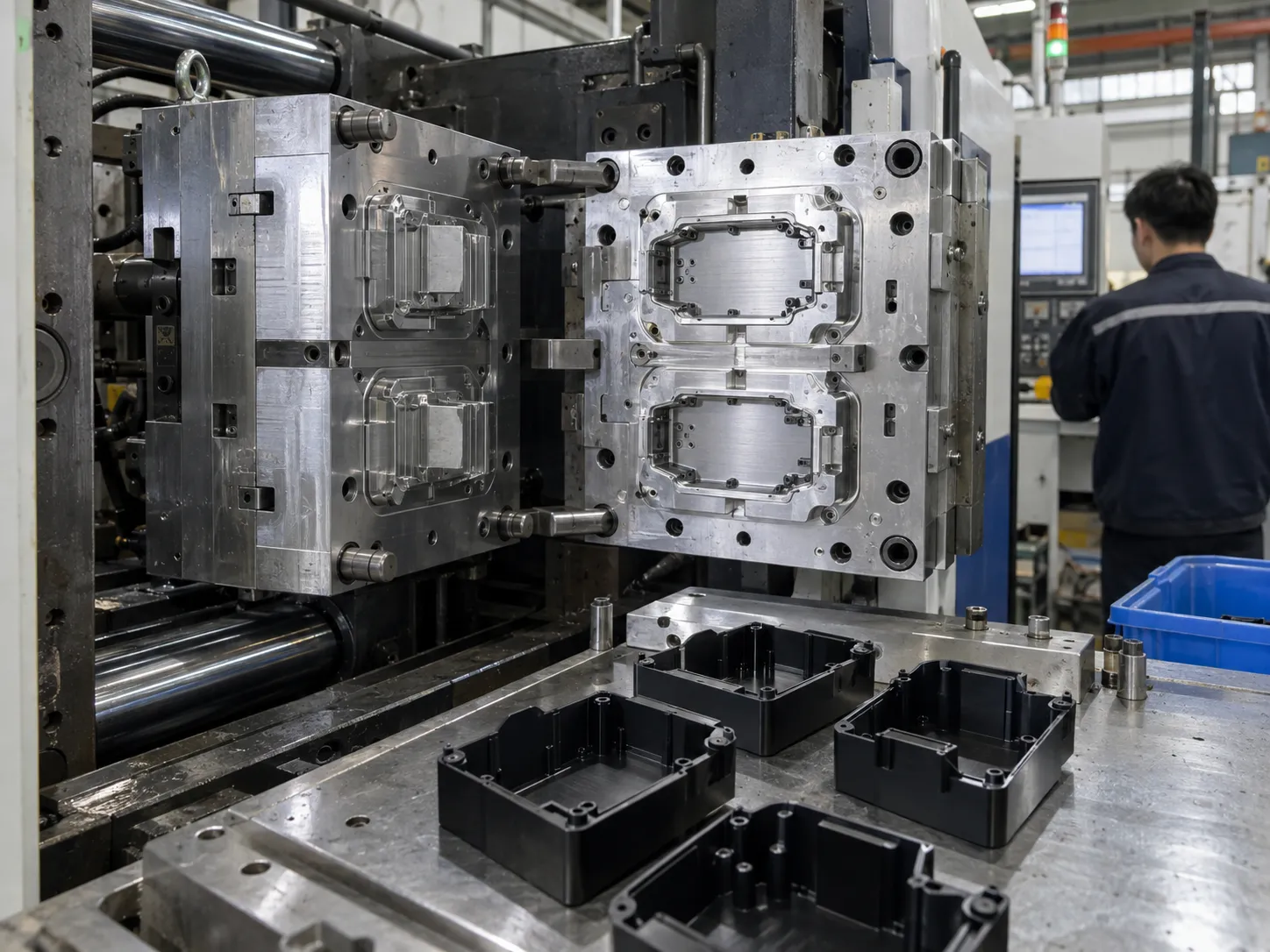
What can CNC-machined prototypes validate well?
CNC machining is effective for checking geometry, interfaces, motion and assembly concepts. Engineers can machine a part from ABS, PC, POM, nylon or other available stock and obtain a dimensionally controlled sample without first building a mold. This makes machining useful when CAD is still changing frequently or only a small number of parts is required.
Machined samples can also be helpful for fixture development, packaging studies and early functional rigs. The limitation is that the material has not experienced resin flow, packing, cooling or ejection. Therefore, a machined part may remain flat and stable even when the eventual molded part would warp or shrink differently.
What manufacturing effects appear only in molded parts?
Injection molding introduces gate marks, weld lines, flow orientation, local packing differences, shrinkage gradients and molded-in stress. Thin ribs may fill differently than expected. Thick bosses can produce sink. A long flat enclosure can distort after cooling. A snap-fit may behave differently because the molded polymer chains and fibers are oriented by flow.
These effects are exactly why a molded sample is useful before production tooling. The injection molded prototype process guide describes how product design, DFM, tooling, molding and inspection work together during this stage.
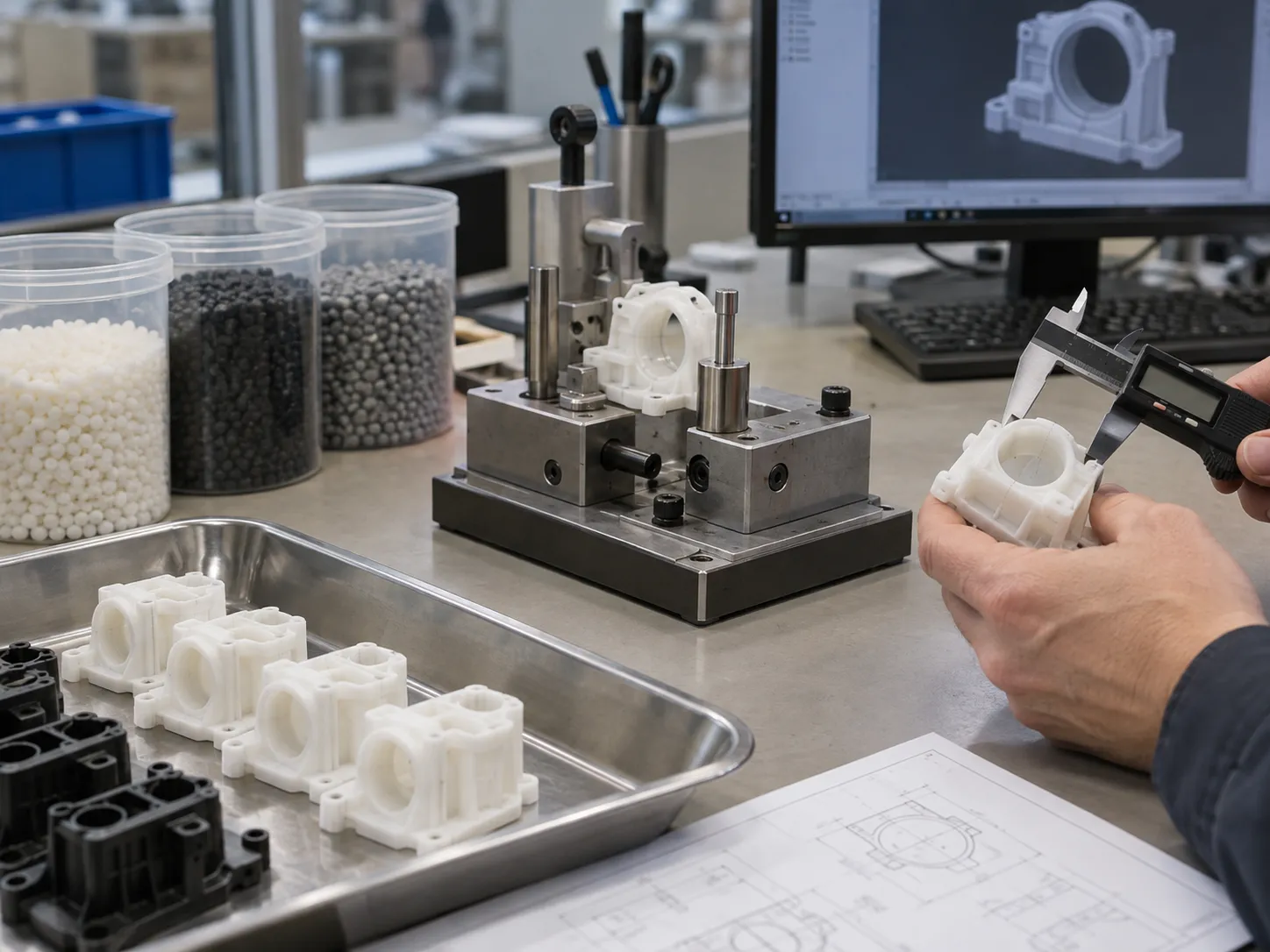
When does material equivalence matter most?
Machining from the same polymer family does not always mean the sample is equivalent to a molded part. Stock shape, extrusion history, moisture condition and fiber orientation can differ from injection molding. This matters when the product depends on snap-fit flexibility, fatigue, local strength, dimensional stability or reinforced resin behavior.
If the project must confirm how the exact production resin behaves inside the final geometry, injection molded prototypes usually provide a stronger basis for decision-making. Engineers should still define the test objective in advance so that the molded sample is evaluated against functional requirements rather than simply judged by appearance.
How should assembly validation be planned?
Assembly problems often appear at interfaces: screw bosses, clips, sealing surfaces, connectors and alignment features. Mold shrinkage can change hole spacing or create local distortion. Ejection can influence thin walls. Fiber-filled materials can pull a component in one direction. These effects can change how two parts fit even when the CAD model is correct.
A useful validation build uses molded parts in the actual assembly, records where interference occurs and measures the related features. HPDI’s case study section shows the broader types of prototype and molding work used during product development.
Can both methods be used in the same project?
Yes. The best development plan often uses each process at the stage where it provides the most value. Machining can support fast geometry iterations before the design is ready for tooling. A simplified injection mold can then be built when the team needs production-material behavior and repeated molded samples. The methods are complementary, not competing.
This staged approach is also described in the existing comparison of prototype injection molding, 3D printing and CNC machining. The key is to avoid paying for molded validation before the design is mature enough, while also avoiding a production-mold investment before molding-specific risks have been tested.
Decision checklist: when to move to injection molded prototypes
Consider moving from machined parts to molded prototypes when at least one of these questions becomes important:
-
Will the final resin fill the geometry consistently?
-
Will shrinkage affect critical dimensions?
-
Will the part remain flat after cooling?
-
Are weld lines or gate marks functionally important?
-
Do snap-fits, bosses or living features need molded-material testing?
-
Is the project preparing for pilot production or certification builds?
If none of these questions matters yet, another prototype process may still be more efficient.
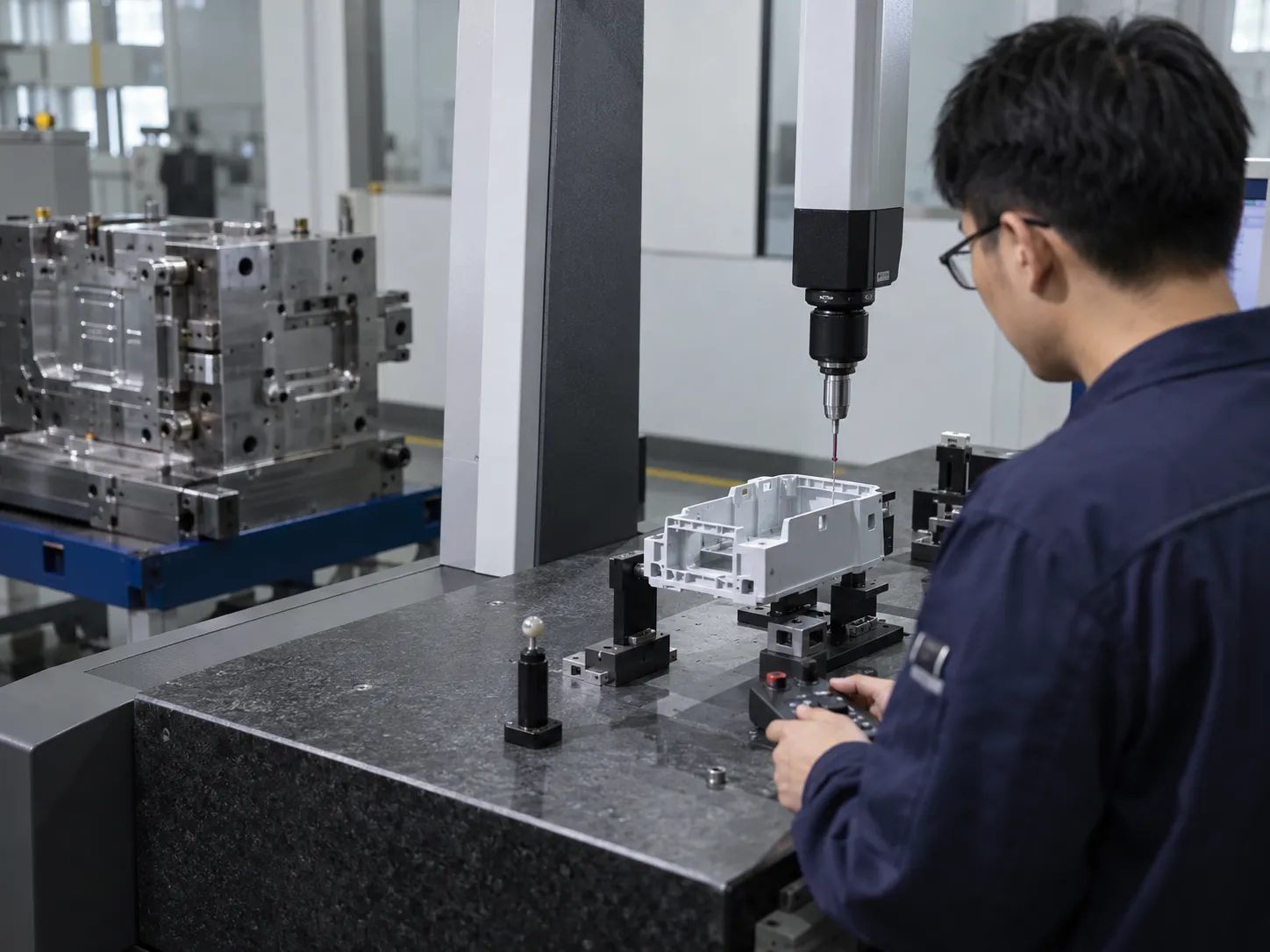
A practical transition plan from machining to molding
Before ordering a prototype mold, freeze the interfaces that matter most, confirm the intended production resin, mark the dimensions that influence assembly and decide what the molded parts must prove. The tool can then be simplified around those questions rather than designed as a miniature production mold.
After T1, compare the molded parts with the machined baseline. If a dimension changes, determine whether the difference comes from shrinkage, warpage, draft, ejection or measurement method. If assembly behavior changes, connect the observation to the relevant geometry and material condition. This comparison turns two prototype methods into a structured learning sequence rather than two unrelated sets of samples.
Conclusion
Injection molded prototypes provide better validation than machined parts when the project must evaluate the interaction between resin, mold, process and final geometry. Machined parts remain valuable for fast design checks, but they cannot reproduce every molding-specific effect.
For help choosing the appropriate stage to build a prototype mold, review HPDI’s FAQ or contact the engineering team with the current CAD revision and validation goals.
Copyright 2026(C) HUAWEI PRODUCT DEVELOPMENT INDUSTRIAL LTD (2009-2024)
All Rights Reserved
marketing@prototypeinjectionmold.com
Contact Information :
Byron Wang
Phone: +86- 86-755-8238-2595
Mobile: +86-139-2383-5403
Email: marketing@prototypeinjectionmold.com
HPDI (HUAWEI PRODUCT DEVELOPMENT INDUSTRIAL LTD)
Address:Building 3, Puxia Industrial Zone, Liuyue, Henggang St., Longgang District, Shenzhen., China