

Prototype Injection Mold Material Selection: Aluminum, Steel & Hybrid Tooling
Start with the Complete Project
Selecting a mold material based only on price can create problems later in development. Prototype tooling must survive the intended resin, injection pressure, ejection forces, engineering changes, and required production quantity. Choosing the correct prototype injection mold material therefore requires understanding the complete project rather than selecting aluminum or steel by habit.
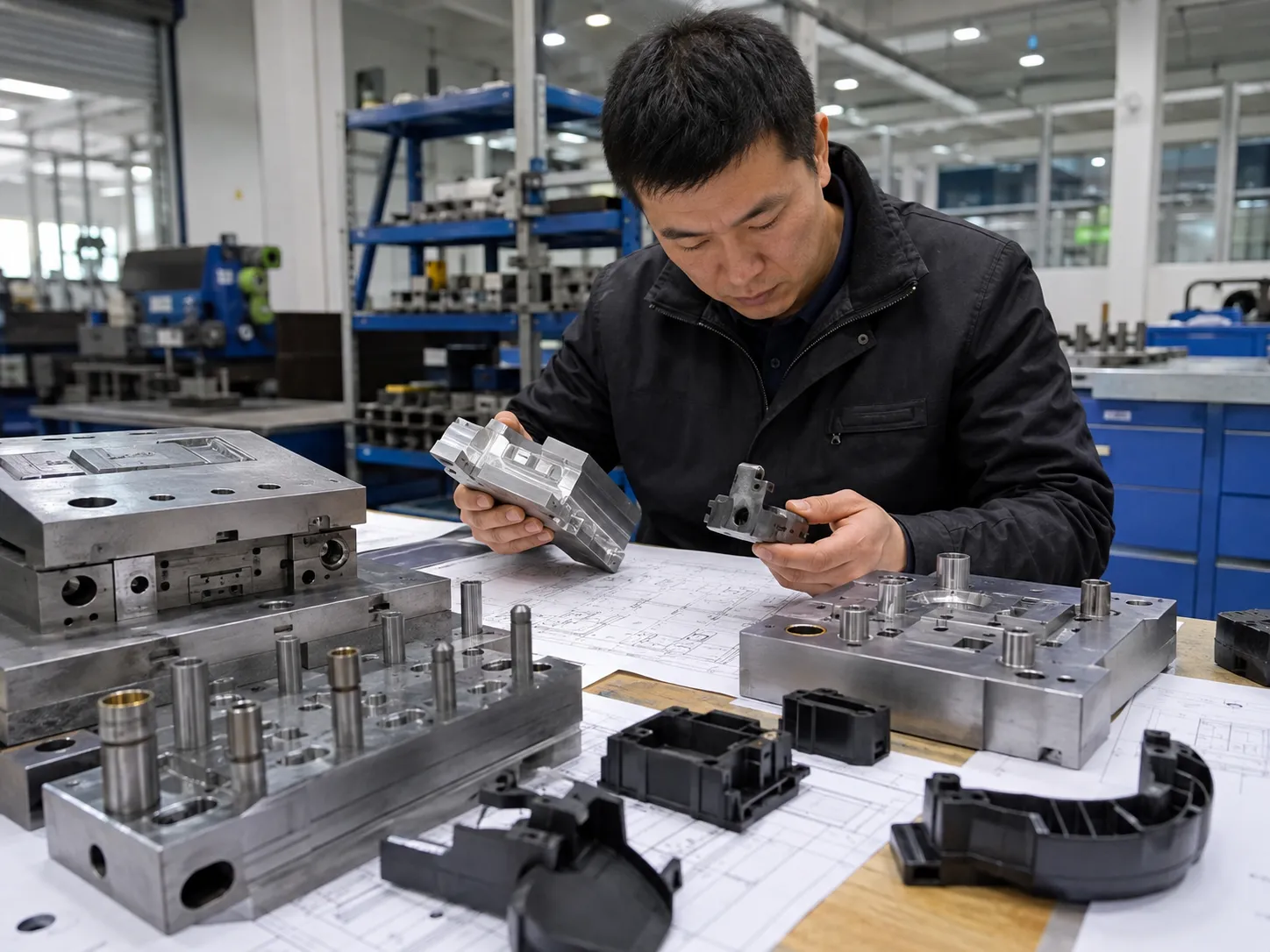
Start with Expected Quantity
The first question is not which metal is cheapest, but how many usable molded parts are required. A tool needed for a limited validation batch has different requirements from a tool expected to support repeated pilot production. Expected quantity influences wear resistance, mold-base construction, insert design, cooling, surface treatment, and maintenance. Learn more about HPDI's prototype injection molding service.
Evaluate the Plastic Resin
Some materials are much harder on tooling than others. Unfilled thermoplastics generally create less abrasive wear than glass- or mineral-filled materials. Engineers should provide the exact resin grade whenever possible. Important factors include filler percentage, processing temperature, viscosity, chemical behavior, and required mold temperature.
Aluminum for Rapid Prototype Tooling
Aluminum is attractive because it can be machined efficiently. For selected parts, this helps reduce machining time and makes design changes easier to implement. Aluminum can be especially useful for product validation, limited production, pilot quantities, market testing, and designs likely to change. However, it is not automatically the best choice for highly abrasive materials or mechanically demanding tooling features. Learn more about HPDI's inspection and manufacturing facilities.
Simplified Steel for Greater Durability
Steel prototype molds provide another useful option. The tool can still remain simplified while using steel in the cavity, core, or wear-sensitive areas. Steel may be preferred when more cycles are expected, glass-filled resin is used, tight shutoffs are required, sliding features experience wear, or high mechanical loads are present.
Hybrid Tooling
Mold material does not always have to be all-aluminum or all-steel. A hybrid approach may use aluminum for the main cavity system and steel in high-wear regions such as gate inserts, sliding components, threaded inserts, shutoff surfaces, and ejector interfaces. This places durability where it is most valuable. Learn more about HPDI's prototype molding case studies.
Consider Dimensional Requirements
Tolerance expectations also influence material selection. Large molds and thermally sensitive components require consideration of mold expansion, resin shrinkage, cooling, and processing stability. The tooling manufacturer should understand which dimensions truly affect product function so machining and inspection resources are focused appropriately.
Surface Finish and Cosmetic Requirements
Cosmetic parts may require polishing, texture, gloss control, grain, or laser marking. Different mold materials respond differently to finishing techniques, and the process may affect cost and lead time. Surface requirements should therefore be communicated before mold material is finalized. Learn more about HPDI's FAQ.
Consider Future Production
A project expected to transition rapidly into higher-volume manufacturing should consider how prototype tooling data will be transferred. Useful information includes mold shrinkage, gate performance, cooling behavior, ejection, wear, dimensional corrections, and approved process settings.
Match Mold Material to the Resin Family
Material selection becomes easier when the resin family is known early. Unfilled ABS, PP, or PE may place modest wear on tooling, while glass-filled PA, PBT, PPS, or other reinforced materials can justify steel at gates, shutoffs, and moving interfaces. High-temperature polymers may also require tighter control of mold temperature and thermal expansion. The toolmaker should review the actual supplier grade whenever possible because filler percentage and processing conditions can change the recommendation. Learn more about HPDI's submit project drawings.
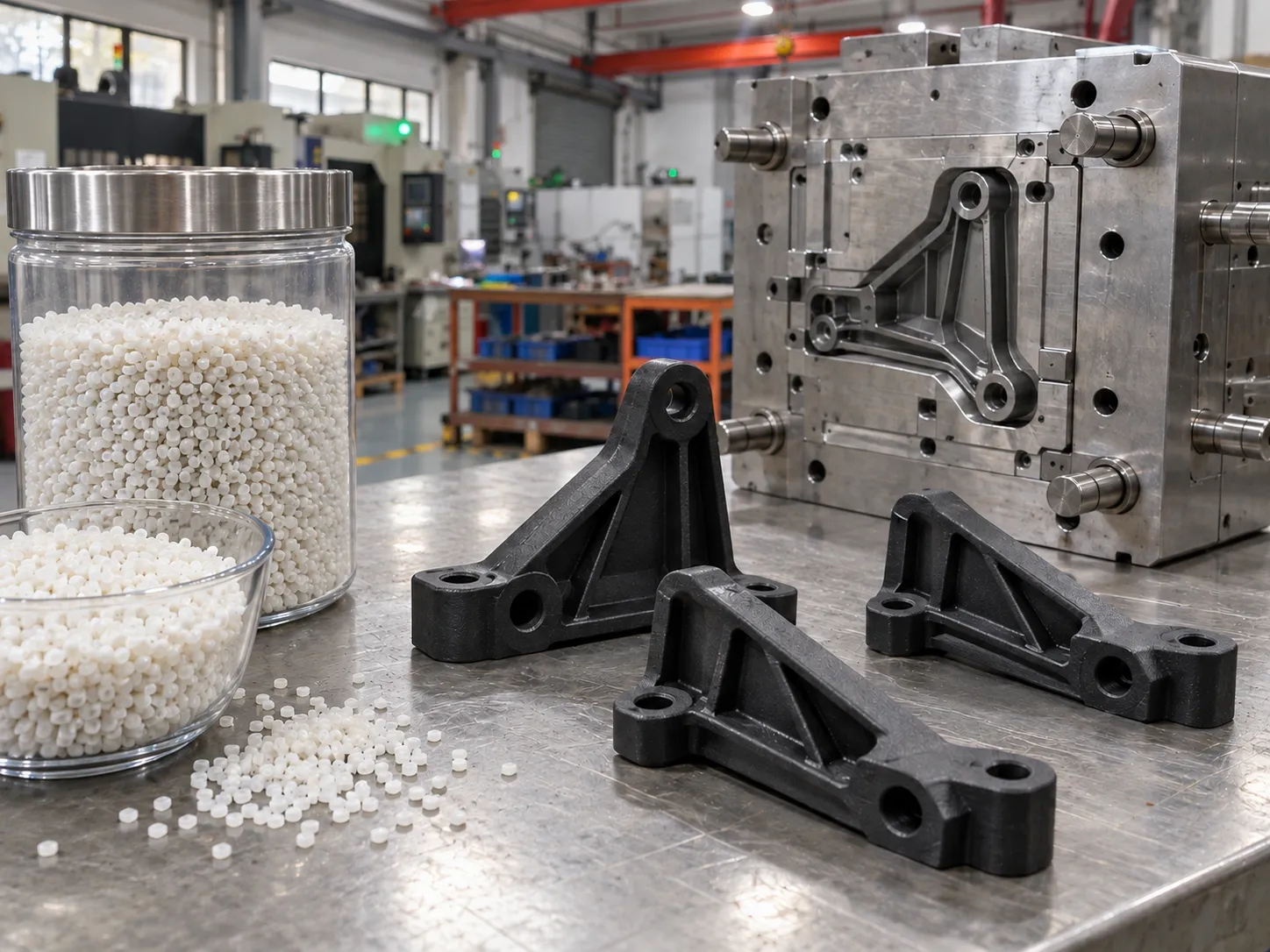
Do Not Ignore Surface Treatment and Inserts
The base metal is only one part of the tooling strategy. Wear-resistant inserts, coatings, polishing, hard anodizing, or local steel components can improve performance in demanding areas. These options are particularly useful when most of an aluminum mold is suitable for the project but one gate, slide, or shutoff experiences concentrated wear. A localized upgrade may provide a better cost-performance balance than changing the entire tool to steel.
Document Why the Material Was Chosen
For development programs involving several teams or future suppliers, record the reason behind the tooling-material decision. Note expected quantity, resin, critical features, tool-life assumptions, modification risk, and planned production transition. This documentation helps later engineers understand whether the prototype mold can support additional orders or whether a new production tool should be started. It also prevents a temporary development choice from being mistaken for a permanent manufacturing standard.
Review Tooling Material after T1
The initial mold-material choice can be revisited after the first trial. If wear is negligible and the process is stable, the original strategy may be suitable for additional pilot production. If gate erosion, shutoff wear, or repeated repair appears earlier than expected, the toolmaker can recommend local steel inserts or a new simplified steel tool. Using actual T1 data to confirm the material decision is more reliable than relying only on general shot-life assumptions before molding begins.
Balance Initial Cost with Rework Risk
A lower-cost mold material is not economical if it creates repeated repair, unstable dimensions, or an early replacement tool. Conversely, specifying premium steel everywhere can be unnecessary for a limited validation program. The best material strategy balances initial machining cost with the probability of wear, modification, and additional production. This total-risk view is more useful than comparing metal prices alone.
Conclusion
Prototype injection mold material selection is a technical decision, not simply a price comparison. Aluminum can provide efficient machining and flexibility for selected short-run projects. Simplified steel tooling can provide additional durability for demanding materials and longer molding programs. In many cases, hybrid tooling provides the best balance.