

Prototype Injection Mold Lead Time: 12 Ways to Reduce Delays
Why Lead Time Matters
Product-development schedules often depend on how quickly engineers can obtain production-representative molded parts. When design verification, assembly testing, certification, or customer trials are waiting for molded samples, even a short tooling delay can affect the entire project timeline. Reducing prototype injection mold lead time should not mean removing engineering work required to produce reliable parts. The better strategy is to simplify the tooling system while protecting the features that directly influence part quality.
Start with a Complete DFM Review
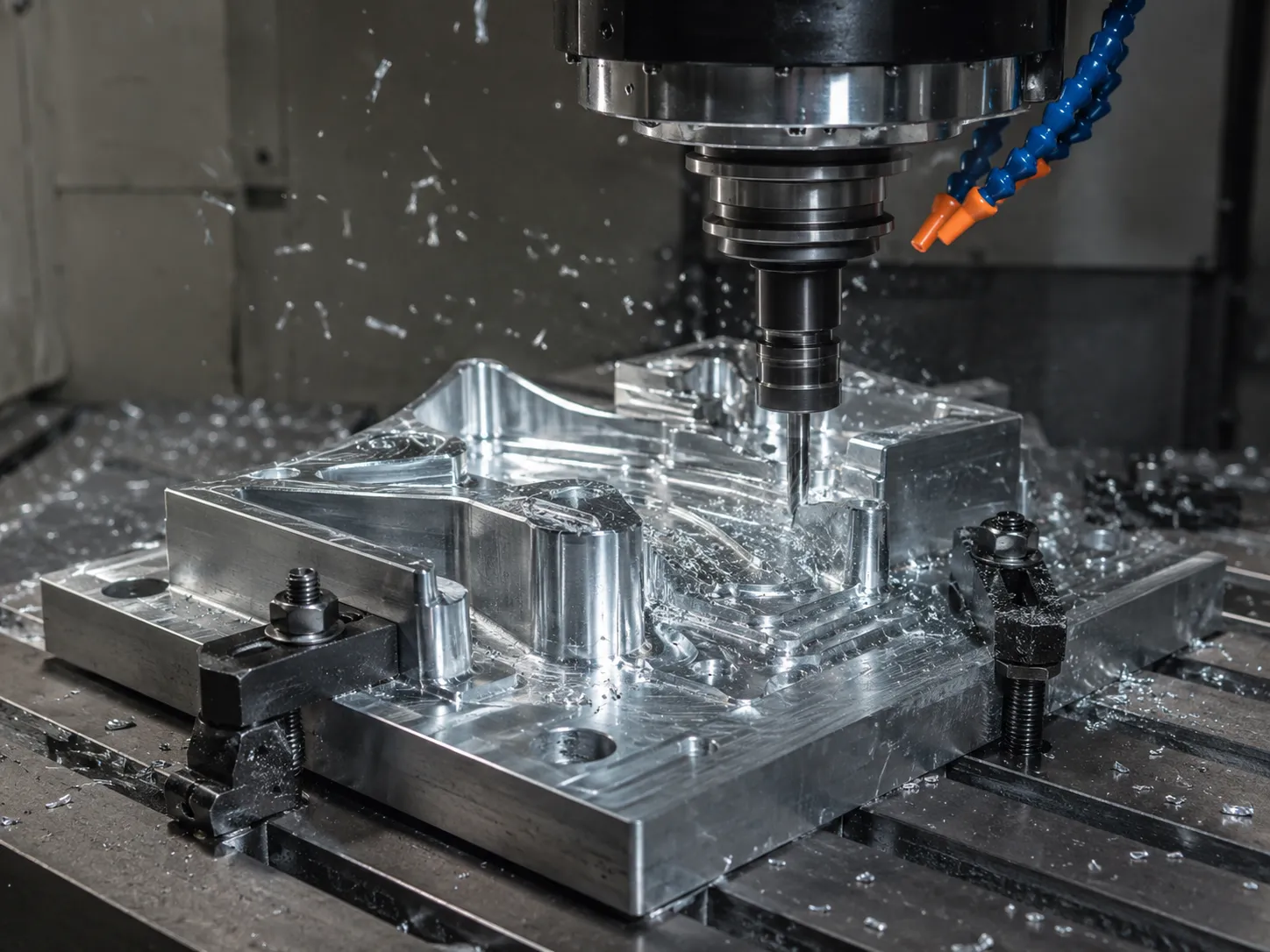
One of the most common causes of tooling delay is changing the part design after mold manufacturing has already started. Before cutting metal, the mold manufacturer should review wall thickness, draft angles, undercuts, ribs and bosses, gate location, parting lines, ejection, critical dimensions, and material shrinkage. An early DFM review allows manufacturing problems to be corrected in CAD instead of through expensive mold modifications. Learn more about HPDI's prototype injection molding services.
Use a Simplified Mold Structure
Prototype tooling does not normally require all the features of a long-life production mold. A mass-production mold may include multiple cavities, automated sliders, complex hot runners, advanced cooling circuits, sensors, and robotic handling. For development-stage parts, many of these systems may not yet be necessary. A simplified prototype mold can use a single cavity, standard mold bases, manual inserts, cold runners, simplified cooling, and limited automation.
Consider Aluminum Tooling
Aluminum can be useful when short machining cycles and easier engineering changes are important. Compared with hardened production steel, aluminum is generally easier to machine, which can reduce CNC machining time for suitable components. Aluminum molds are particularly useful for prototype injection molding, pilot production, market testing, low-volume manufacturing, and products that may still require design changes. Learn more about HPDI's prototype molding case studies.
Use Standard Mold Components
Custom components require additional engineering and machining. Whenever the project permits, standard mold bases, ejector components, locating rings, sprue bushings, and other commercially available elements can shorten manufacturing time. Standardization also makes replacement and maintenance easier during later molding trials.
Identify Likely Engineering Changes
Prototype molds frequently require modifications after the first trial. A good tooling design anticipates this possibility. Areas likely to change can be designed with replaceable inserts, including snap-fit areas, connector openings, critical bosses, functional sealing features, local ribs, and gate regions. An insert can often be replaced or modified more efficiently than reworking a complete cavity. Learn more about HPDI's manufacturing facilities.
Confirm the Production Resin Early
Changing material after tooling begins can create unexpected delays. Different plastics have different shrinkage rates, melt temperatures, flow characteristics, mold temperature requirements, and abrasion levels. If the exact material is not available, the engineering team should at least define the material family and important physical requirements before mold design.
Run Machining Operations in Parallel
Where appropriate, manufacturing activities can be scheduled in parallel instead of sequentially. The mold base can be prepared while cavity inserts are being CNC machined, and electrodes can be manufactured while other components undergo finishing operations. This requires careful project management but can reduce overall tooling lead time. Learn more about HPDI's FAQ.
Do Not Skip Mold Trials
Trying to save time by eliminating proper mold trials often creates more delay later. The first molding trial should evaluate filling, gate performance, ejection, flash, sink marks, warpage, dimensions, appearance, and assembly. A controlled T1 trial followed by targeted modifications is usually more efficient than sending unverified parts directly to customers.
What Usually Causes Schedule Slippage
Tooling schedules often slip because inputs are incomplete rather than because CNC machining is slow. Late drawing revisions, unknown resin grades, missing texture requirements, undecided undercuts, and unconfirmed critical dimensions can stop design approval repeatedly. A fast project therefore needs a clear design-freeze point for the prototype stage, even if later engineering changes are expected. A controlled revision process is faster than allowing multiple versions of CAD and drawings to circulate at the same time. Learn more about HPDI's contact page.
Prioritize the Critical Path
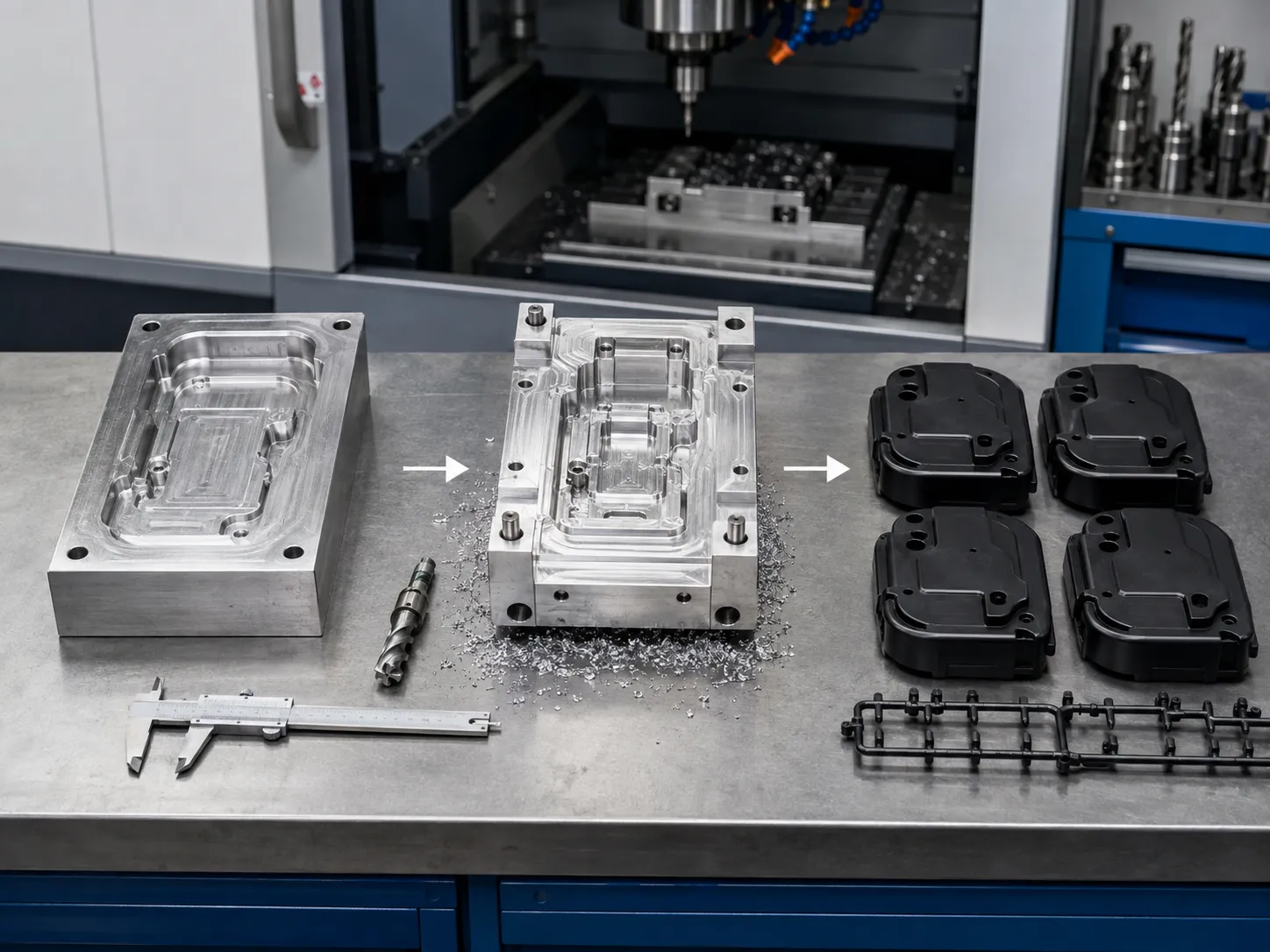
Not every mold component controls delivery. Identify the features that determine the critical path, such as deep EDM cavities, long-lead standard components, special surface treatments, or complex inserts. Start those operations early while simpler plates and components are manufactured in parallel. The same logic applies after T1: address functional blockers first, then cosmetic refinements. This keeps engineering decisions focused on what is actually preventing the next validation step.
Measure Lead Time from Approved Data
When comparing suppliers, define when the clock starts. A quoted tooling lead time should normally begin after final CAD, drawings, resin information, and tooling requirements are approved. Counting from an early inquiry can make schedules misleading because unresolved engineering decisions are not manufacturing time. Clear milestones such as DFM approval, tool-design approval, T1, modification, and sample shipment make the schedule easier to manage and improve communication between customer and toolmaker.
Control Communication as Carefully as Machining
Fast tooling projects need fast decisions. Assign one approved contact for design questions, define how drawing revisions are released, and set response deadlines for DFM and T1 feedback. A mold can sit idle longer waiting for an approval than it spends on a machining operation. Clear communication, revision control, and early agreement on acceptance criteria are therefore part of lead-time reduction, not administrative details outside the manufacturing process.
Conclusion
Reducing prototype injection mold lead time depends more on intelligent tooling decisions than simply machining faster. Early DFM, simplified mold structures, aluminum tooling where appropriate, standard components, replaceable inserts, early material confirmation, and coordinated manufacturing can significantly improve development efficiency while protecting part quality.